Discover the best healthy food scanner app for your goals. We review 12 top apps for nutrition, heart health, and decoding labels in the grocery aisle.
Navigating grocery store aisles can be overwhelming, with thousands of products vying for your attention, each with a complex nutrition label. A healthy food scanner app simplifies this process, transforming your smartphone's camera into a powerful nutritional guide. These apps allow you to scan a product's barcode and receive an instant, easy-to-understand breakdown of its ingredients, nutritional value, and overall healthiness. This guide offers a comprehensive review of the top scanner apps available, helping you find the perfect tool to support your specific health goals, whether you're managing a heart condition, avoiding allergens, or simply aiming to make more informed dietary choices.
This article moves beyond basic feature lists to provide a detailed, comparative analysis. For each app, you will find a clear breakdown of its core functions, unique strengths, and potential limitations. We'll explore practical use-case scenarios, such as finding low-sodium options for better heart health or identifying products free from specific additives. Each review includes screenshots for a real-world look and feel, direct download links, and pricing information to help you make a confident decision. By comparing apps like HeartFit, Yuka, and Fooducate side-by-side, you can determine which one best fits your lifestyle and integrates with your existing health stack. To further streamline your wellness routine, consider integrating a dedicated meal planning and shopping list app to turn your healthy food discoveries into actionable meal plans.
Disclaimer: This article is for informational purposes only and is not a substitute for professional medical advice, diagnosis, or treatment. Always seek the advice of your physician or other qualified health provider with any questions you may have regarding a medical condition. Never disregard professional medical advice or delay in seeking it because of something you have read in this article.
HeartFit offers a sophisticated, AI-driven approach that stands apart from typical healthy food scanner apps. Instead of just analyzing barcodes for generic nutritional data, it provides a highly personalized system designed to translate specific, bloodwork-based health plans into sustainable daily habits. This platform is expertly engineered for individuals seeking a focused strategy for cardiovascular wellness, particularly those with action plans from providers like Function Health or custom lab results. The core premise is transforming complex medical advice into a simple, gamified daily routine.
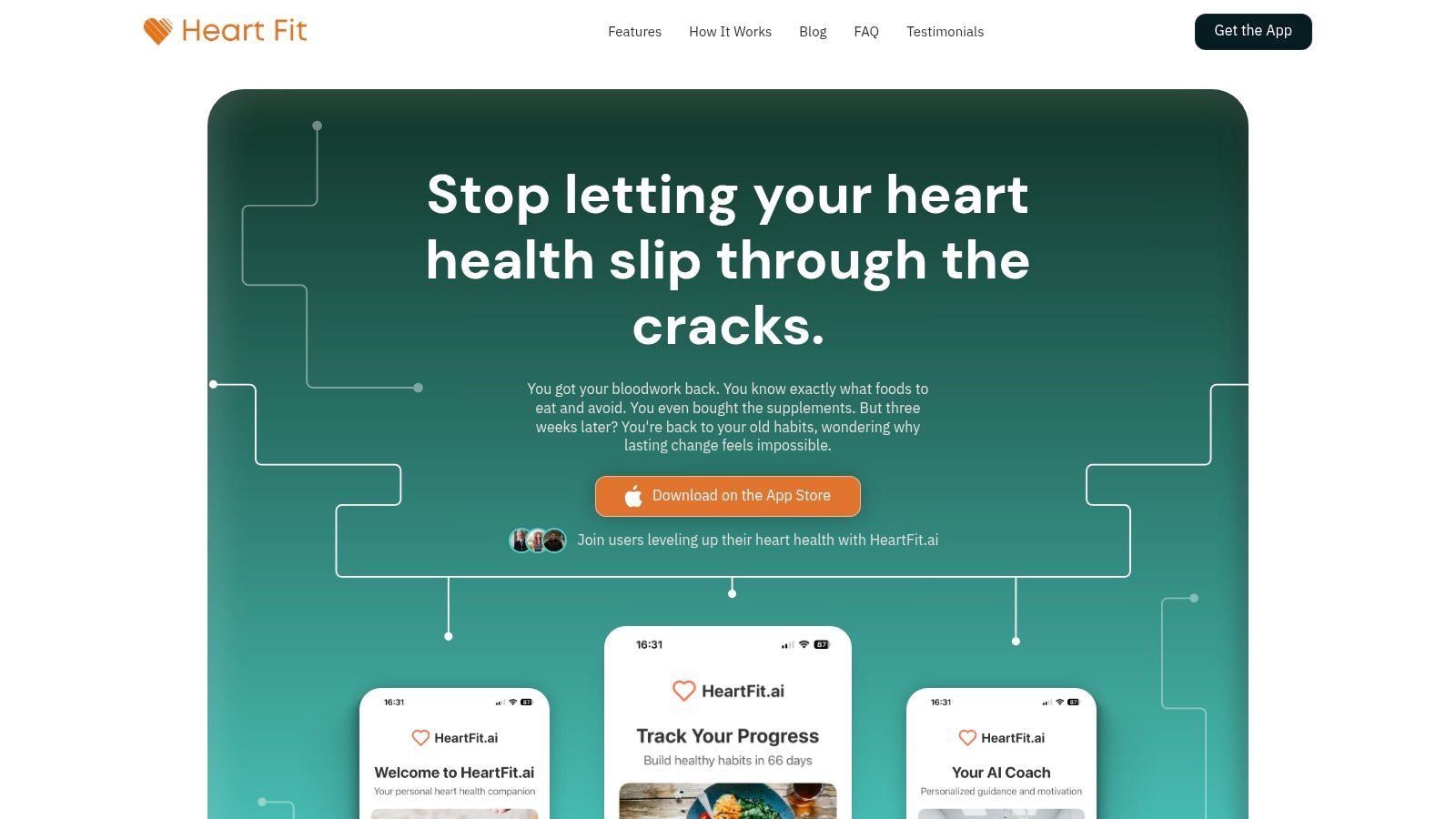
The app’s standout feature is its ability to convert a provider’s action plan into swipeable tasks. Users paste their recommendations, and HeartFit builds a daily checklist focusing on key foods and supplements. This behavior-first design is reinforced with gamification, including points, streaks, and rewards, all built on a 66-day framework designed to solidify new habits, a duration supported by research like a 2009 study in the European Journal of Social Psychology on habit formation. The instant meal-photo scoring is another key differentiator; users upload a picture of their meal and receive an AI-generated score, providing immediate, actionable feedback on how their choices align with their heart-health goals. This visual, real-time feedback loop is a powerful tool for learning and adaptation.
HeartFit makes its advanced system highly accessible. It offers a 7-day free trial, followed by a unique pay-what-you-want monthly subscription that can be canceled at any time. This model significantly lowers the barrier to entry for users wanting to try a personalized health tool. The app is currently available on the App Store for iOS devices.
Website: https://www.heartfit.ai
Yuka is a highly popular healthy food scanner app designed for rapid, on-the-spot grocery decisions. Its core function is to scan a product's barcode and instantly provide a simple, color-coded health rating from 0 to 100. This score is based on nutritional quality (60%), the presence of additives (30%), and whether the product is organic (10%).
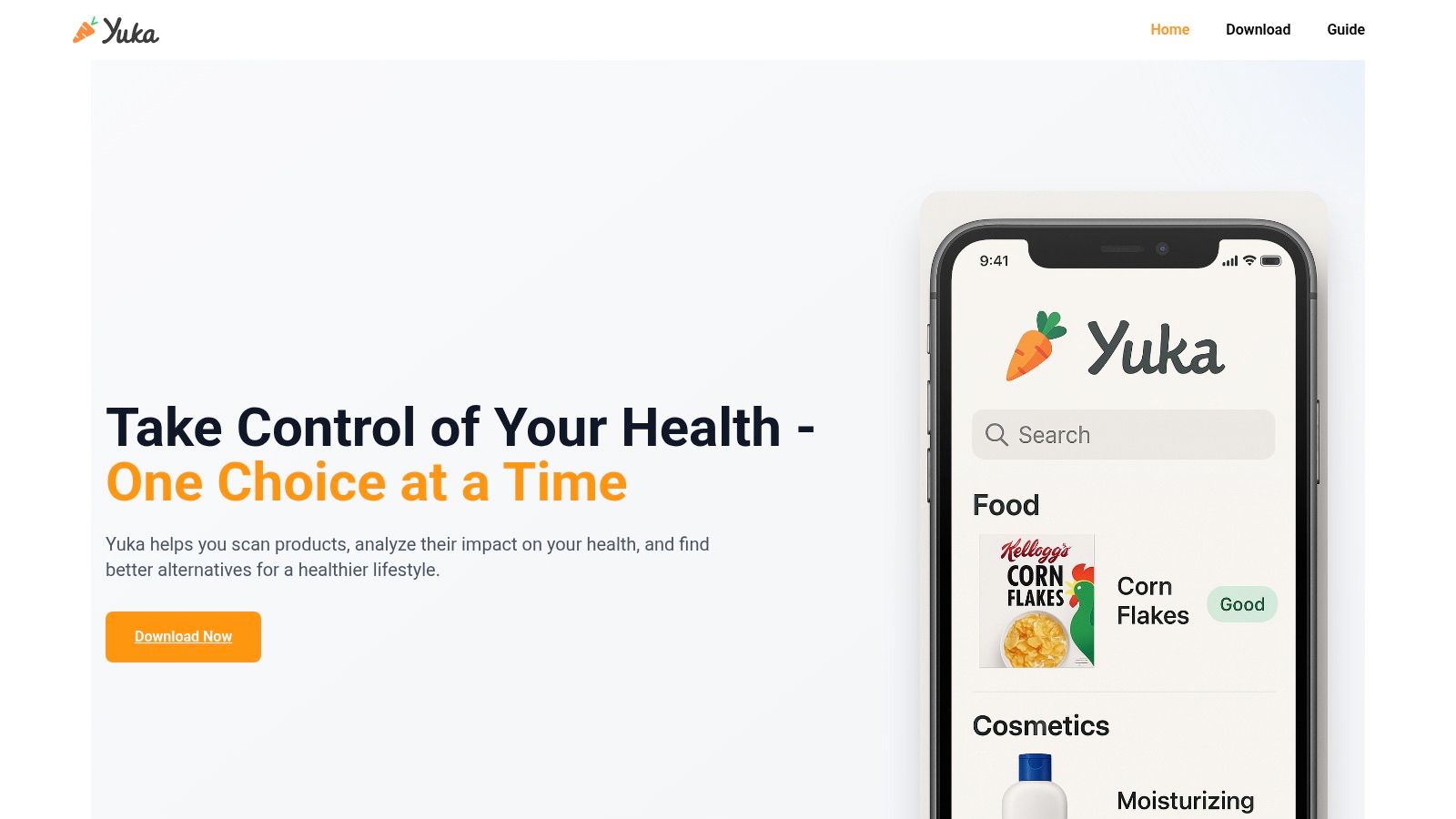
The app excels at explaining why a product received a poor score, detailing issues like high saturated fat, excessive sugar, or controversial additives. When an item rates poorly, Yuka suggests healthier alternatives available in the same store, making it a practical tool for immediate action. Its massive food database and dual functionality for scanning cosmetics give it a unique edge. For a deeper analysis of its features, you can explore our detailed review of the Yuka food scanner app.
Fooducate is a long-standing healthy food scanner app that positions itself as a nutrition educator. By scanning a barcode, it assigns products a simple letter grade (from A to D) based on an algorithm that analyzes nutritional data and ingredient lists. This approach makes it easy to quickly gauge a product's overall healthfulness without getting lost in complex numbers. It prioritizes explaining what is in your food, highlighting both positive attributes like fiber and negatives like excessive sugar or controversial ingredients.
The app's strength lies in its ability to educate users and recommend healthier alternatives for poorly graded items. Fooducate also offers personalization for various diets (e.g., keto, low-carb) and includes basic food and exercise tracking, making it a more holistic nutrition tool. For a deeper look at its capabilities, you can find more information in our overview of food scanner apps. Its large, US-focused database makes it a reliable companion for American shoppers looking to improve their dietary habits.
The EWG Healthy Living app is a powerful healthy food scanner app from the Environmental Working Group, a nonprofit research organization. It goes beyond nutrition by evaluating over 120,000 food and consumer products based on ingredient safety and potential health hazards. When you scan a barcode, the app provides a simple 1-10 rating, with 1 being the best. The score is derived from concerns related to ingredients, nutritional value, and processing levels, all backed by EWG's extensive scientific databases.
This app stands out by covering food, personal care items, and cleaning products, making it a comprehensive tool for reducing overall chemical exposure. Its focus on ingredient hazards provides a unique perspective on product safety. Understanding the broader landscape of food regulations can be revealing, as shown by the 7 food additives outlawed in Europe that are still allowed in the U.S.. EWG’s app helps consumers navigate these complexities directly at the store, empowering healthier choices for their entire household.
Open Food Facts is a non-profit, collaborative project often described as the "Wikipedia of food." Its official app serves as a powerful healthy food scanner app that leverages a massive, open-source database created by volunteers worldwide. Users can scan a product’s barcode to instantly see its Nutri-Score, NOVA classification for ultra-processed foods, and a comprehensive list of ingredients, allergens, and nutritional facts. This community-driven approach ensures the data is transparent and constantly expanding.
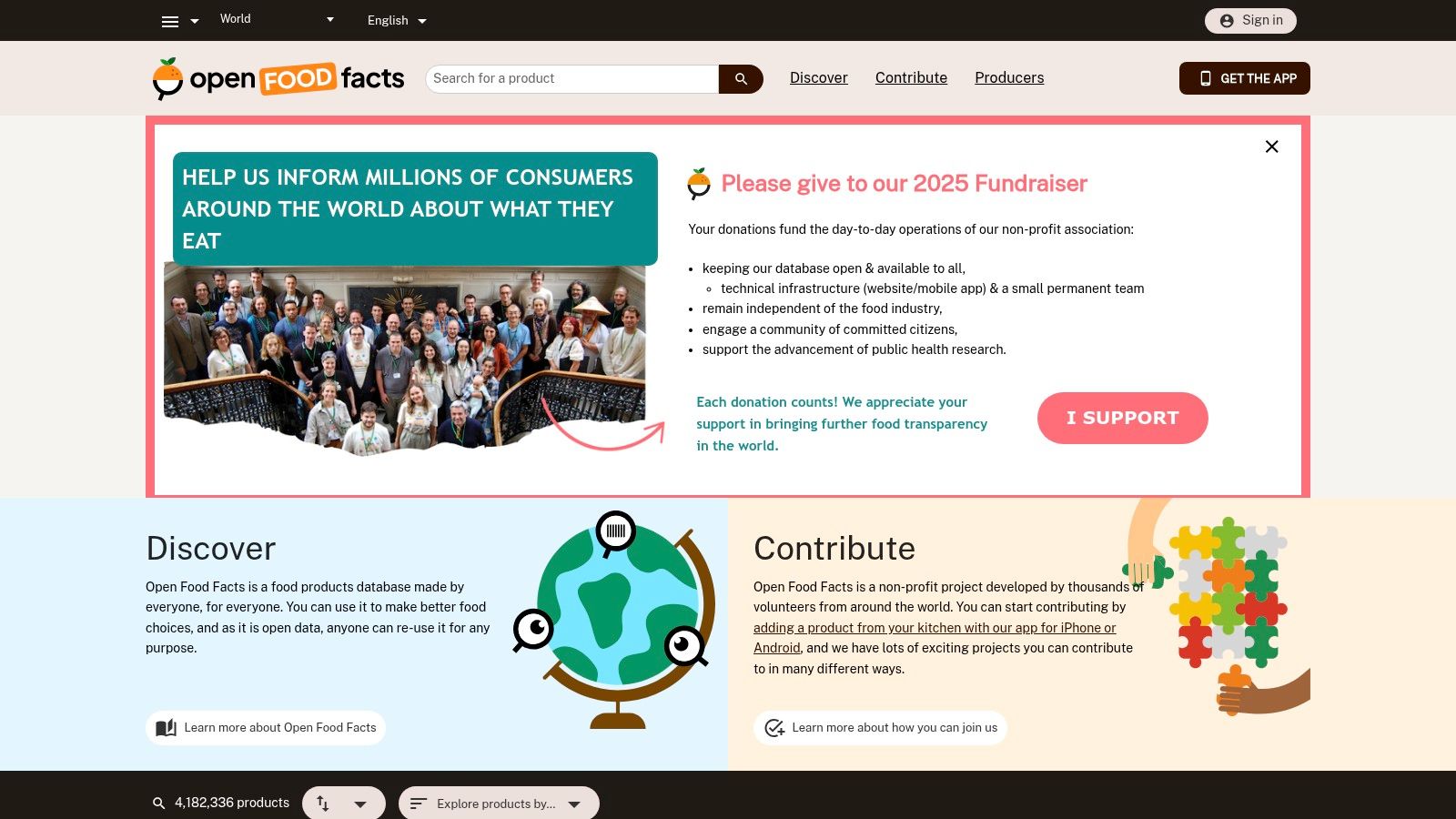
The app's unique strength lies in its transparency and user empowerment. If a product isn't found, you can easily contribute by photographing its packaging and nutrition label, adding to the global resource. This makes it an exceptional tool for those interested in data sourcing, food label literacy, and supporting a free, privacy-focused platform. It provides objective data points, like those defined by public health agencies, allowing users to make informed choices based on raw information rather than a proprietary scoring system.
Fig is a highly specialized healthy food scanner app designed for individuals with complex dietary needs, allergies, and intolerances. Instead of providing a general health score, it delivers a clear "yes" or "no" answer on whether a product fits your specific dietary profile. Users can create a detailed profile by selecting from over 2,800 dietary filters, including Low FODMAP, gluten-free, alpha-gal, and numerous specific allergies.

This app stands out by focusing on ingredient-level suitability rather than broad nutritional metrics. It scans a product's barcode and cross-references its ingredients against your personalized restrictions, flagging potential issues. Fig also supports multiple user profiles, making it an invaluable tool for families or caregivers managing different dietary requirements. Its integration with over 100 US grocery stores and restaurants helps users plan their shopping trips and find suitable products before they even leave home.
Sift Food Labels is a US-centric healthy food scanner app focused on decoding complex ingredient lists and flagging potentially problematic additives. Its primary goal is to translate confusing nutrition labels into straightforward, easy-to-understand language. The app excels at highlighting ingredients that are banned in other countries but are still permitted in the US food supply, offering a unique layer of transparency for health-conscious consumers.
This app is designed for users who want to look beyond basic calorie and macro counts to understand the quality of ingredients they are consuming. After scanning a barcode, Sift provides a simple green, yellow, or red rating based on its analysis. For users following specific diets, the app offers various filters and even includes a curated shop where they can purchase cleaner pantry alternatives directly, making it a practical tool for improving food choices.
Cronometer is a powerful, data-driven nutrition tracker highly regarded by dietitians and health professionals. While primarily known for detailed logging, its mobile app includes a free and unlimited barcode scanner, making it a robust healthy food scanner app. The platform's strength lies in its meticulously vetted food database, which emphasizes verified entries from sources like the USDA and allows users to track up to 84 different micronutrients with exceptional accuracy.
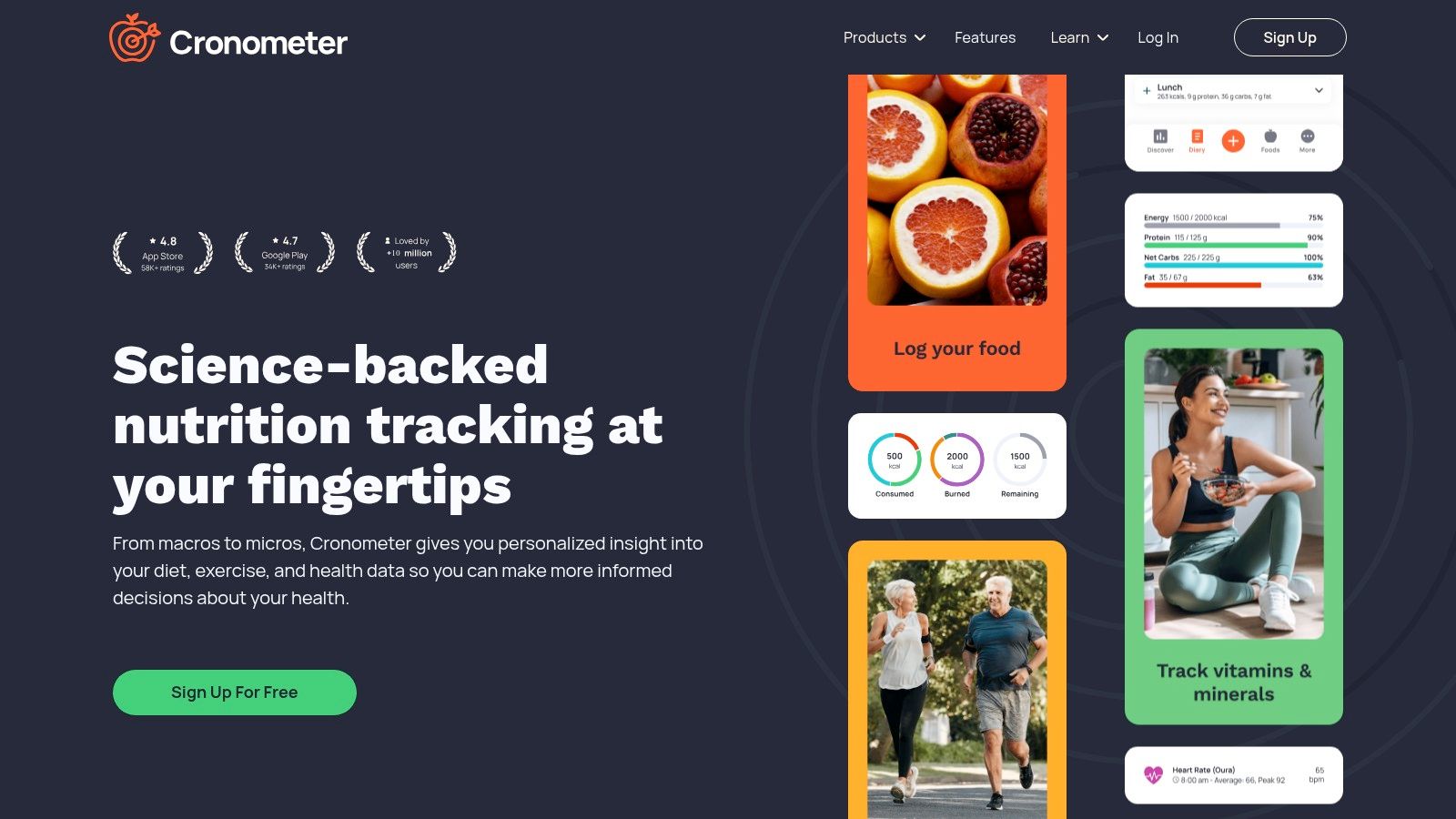
Unlike apps that provide a simplified "good" or "bad" score, Cronometer presents raw, comprehensive nutritional data. After scanning an item, users see a complete breakdown of macronutrients and micronutrients, allowing for a more nuanced assessment based on individual health goals. This is particularly useful for managing conditions like hypertension by tracking sodium, or for monitoring potassium intake, which the American Heart Association notes is important for blood pressure management.
MyFitnessPal is one of the most established and widely integrated nutrition and fitness trackers available. While primarily known for manual food logging, its barcode scanner is a key feature for quickly adding packaged foods. The app's main strength is its colossal, user-generated food database, making it easy to find nearly any US product, from major brands to obscure store-brand items. It serves as a comprehensive hub for tracking calories, macronutrients, and exercise.
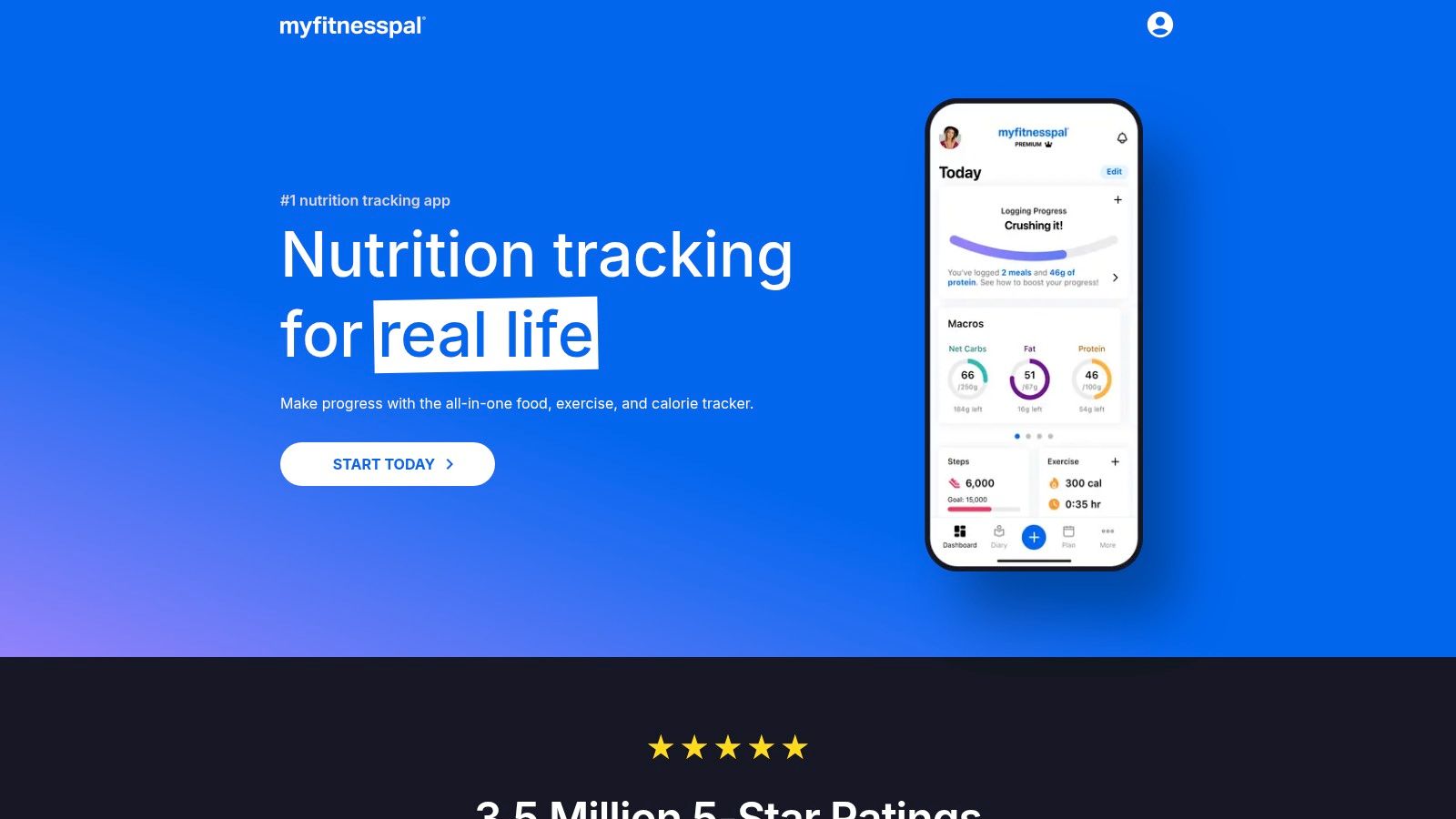
Unlike apps focused solely on food quality scores, MyFitnessPal excels at detailed macronutrient and micronutrient tracking, which is crucial for specific health goals like managing a heart-healthy diet. Premium tiers unlock advanced features like Meal Scan, which identifies food from a photo, and guided meal planners. For those weighing different tracking philosophies, it's helpful to compare its features directly; you can see a detailed breakdown in our comparison of Yuka vs. MyFitnessPal.
Lifesum is a comprehensive healthy-eating app that positions itself as a lifestyle and nutrition coach. While its primary function is calorie and macro tracking, it includes a robust barcode scanner that provides detailed nutritional information and assigns a food rating. The app's design is clean and user-friendly, making it approachable for those new to tracking their food intake.
One of Lifesum's most practical features is its product comparison scanner, which allows you to scan two items at the grocery store and see a head-to-head comparison. This is especially useful for making healthier choices on the spot. As a versatile healthy food scanner app, it also integrates with wearables and offers personalized meal plans and recipes, though many of these advanced features require a premium subscription. The handy iOS Control Center shortcut makes scanning exceptionally quick for daily shoppers.
YAZIO is a comprehensive nutrition and fasting app that integrates a barcode scanner within a broader calorie and macronutrient tracking system. While not a dedicated healthy food scanner app, its scanning feature serves as a quick way to log meals and check nutritional facts. The platform is best known for combining detailed food logging with structured intermittent fasting plans, a large recipe library, and integration with fitness trackers to provide a holistic view of your health and diet.
The app's strength lies in its versatility. Users can scan a product to add it to their daily food diary, immediately seeing how it fits into their calorie and macro goals for the day. This makes it a powerful tool for those who want to do more than just check an item's health score; they want to see its direct impact on their dietary plan. Its global food database and polished user interface make it a popular choice for structured, long-term diet management.
FoodSwitch is a research-backed healthy food scanner app developed by The George Institute for Global Health. Its primary goal is to empower users to make healthier grocery choices by providing clear, at-a-glance nutritional information. After scanning a barcode, the app displays a product's key nutrient data using an easy-to-understand "traffic-light" system for fat, saturated fat, sugar, and salt content.
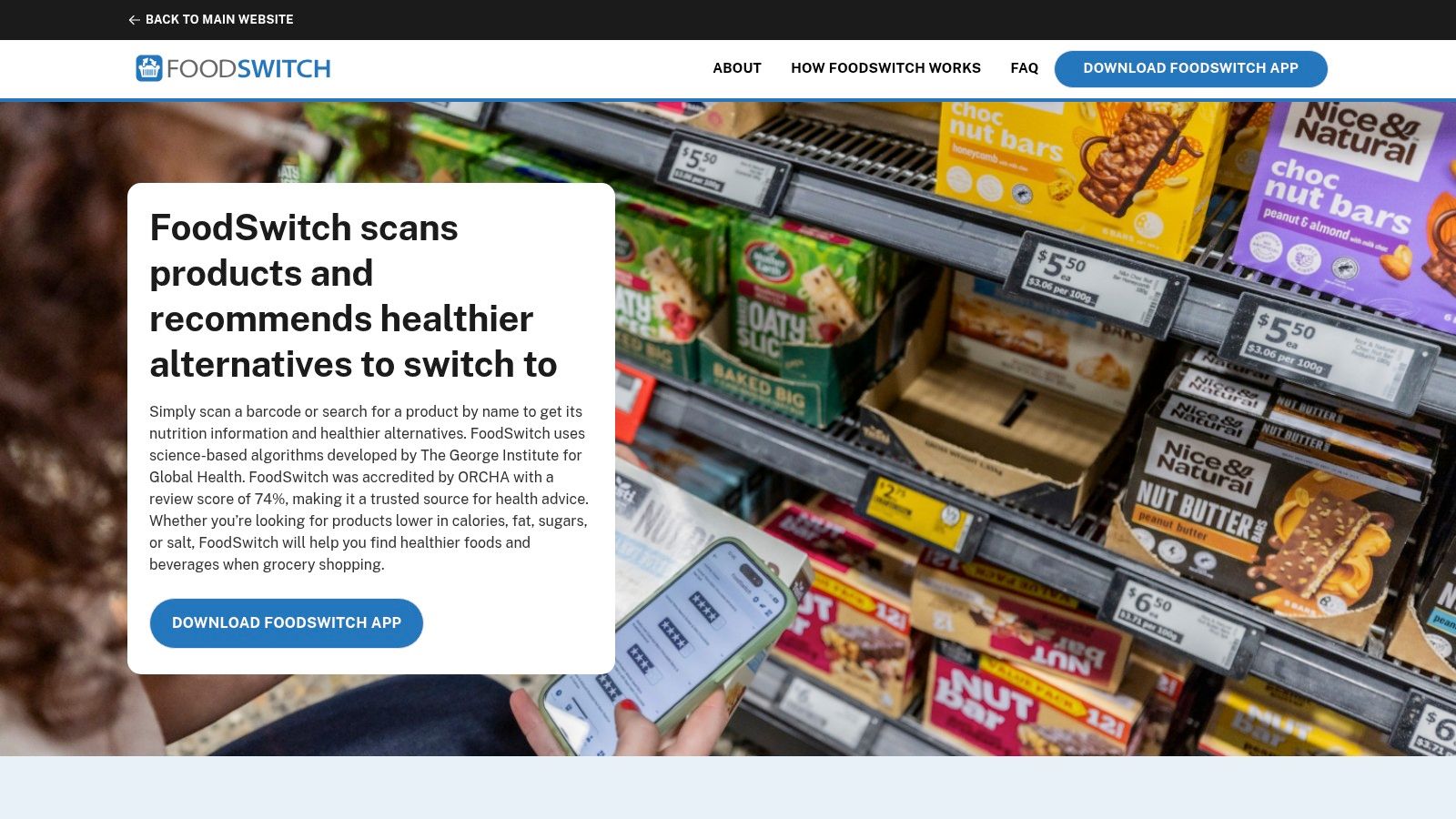
The app's standout feature is its "Switch" function, which suggests healthier alternatives for scanned items, specifically highlighting products with lower levels of problematic nutrients. This makes it an actionable tool for shoppers looking to reduce their intake of salt or sugar. The database is also supported by community photo submissions, allowing it to grow over time. Because its recommendations are driven by an independent, health-research algorithm, users can trust the unbiased guidance.
What is a healthy food scanner app?
A healthy food scanner app is a mobile application that uses your phone's camera to scan the barcode of a food product. It then provides an analysis of the product's nutritional information, ingredients, and overall healthfulness, often presenting it as a simple score, grade, or color-coded rating to help you make more informed purchasing decisions.
How accurate are these food scanner apps?
The accuracy of a food scanner app depends on the quality and source of its database. Apps like Cronometer use professionally verified databases (e.g., from the USDA), making them highly accurate for nutritional data. Others, like MyFitnessPal or Open Food Facts, rely on crowdsourced data, which can sometimes contain errors. Scoring systems (e.g., Yuka, Fooducate) are based on proprietary algorithms, so their "accuracy" reflects their specific health philosophy, which may or may not align perfectly with official dietary guidelines.
Can these apps help with specific health conditions like heart disease?
Yes, these apps can be valuable tools. For example, you can use them to quickly identify low-sodium products, as recommended by the CDC for managing high blood pressure. However, specialized apps like HeartFit are designed to go a step further by creating personalized action plans based on your specific health data (like bloodwork) rather than just providing generic food scores.
Are food scanner apps a substitute for professional medical advice?
No. These apps are informational tools designed to support healthier choices. They are not a substitute for advice from a healthcare provider or a registered dietitian. You should always consult a professional before making significant changes to your diet, especially if you have a pre-existing medical condition.
Navigating the crowded aisles of a grocery store can feel like an overwhelming task, especially when you're committed to making healthier choices for yourself and your family. The sheer volume of products, combined with often confusing nutritional labels, presents a significant challenge. As we've explored, a healthy food scanner app is no longer just a novelty; it's a powerful tool that transforms your smartphone into a personal nutritionist, providing clarity and confidence with a simple scan.
Throughout this guide, we've dissected a wide range of applications, from specialized scanners like Yuka and Fooducate that score products based on nutritional quality and ingredients, to comprehensive trackers like Cronometer and MyFitnessPal that log your daily intake. Each app offers a unique approach to demystifying food labels and empowering you to make informed decisions. The key takeaway is that the "best" app is highly personal and depends entirely on your individual health goals, dietary needs, and lifestyle.
Your journey toward better health is unique, and the digital tools you choose should reflect that. Before downloading the first app you see, take a moment to consider what you truly need.
Ultimately, the most effective strategy is to integrate a healthy food scanner app into a broader health stack. Use a scanner at the grocery store to make better purchasing decisions, then log those foods into a dedicated tracking app to monitor your daily and weekly progress. This combination ensures you are both choosing well and consuming well.
Remember, these applications are powerful aids, but they are not substitutes for professional medical advice. Always consult with your healthcare provider or a registered dietitian before making significant changes to your diet, especially if you have pre-existing health conditions. They can provide personalized guidance that technology alone cannot. The goal is to use these tools to support your health journey, turning complex nutritional data into simple, actionable steps toward a healthier, more vibrant life.
Ready to move beyond generic food tracking and focus specifically on your cardiovascular well-being? HeartFit integrates nutrition, biometrics, and activity into a single, cohesive platform designed for proactive heart health management. Take control of your health journey by visiting Heart Fit to learn how a specialized approach can make all the difference.
Download HeartFit.ai and start your 66-day journey today.



Join the #hearthealth crowd who are leveling up their heart health with HeartFit.ai