Curious about what supplements does Rhonda Patrick recommend? Discover her science-backed list for cellular health, longevity, and optimal performance.

Dr. Rhonda Patrick, a Ph.D. in biomedical science and founder of FoundMyFitness, is a leading voice in health and longevity, known for her evidence-based approach to nutrition and supplementation. Unlike fleeting wellness trends, her recommendations are deeply rooted in rigorous scientific research, focusing on specific compounds that fill common nutritional gaps and support critical cellular pathways. Her philosophy often highlights the importance of managing systemic inflammation to improve long-term health outcomes. For additional perspectives on various natural strategies for reducing inflammation, there are many resources available that complement her core principles.
This article provides a comprehensive and actionable answer to the question, "what supplements does Rhonda Patrick recommend?", breaking down her core stack based on her latest research and public statements. We will explore the "why" behind each choice, examining the supporting evidence from authoritative sources like the National Institutes of Health (NIH) and peer-reviewed studies published on platforms such as PubMed. You will learn not just what she recommends, but also the mechanisms of action, typical dosages, and the specific health goals each supplement targets, from enhancing cognitive function to promoting cardiovascular wellness.
Disclaimer: This article is for informational purposes only and is not a substitute for professional medical advice, diagnosis, or treatment. Always seek the advice of your physician or other qualified health provider with any questions you may have regarding a medical condition. Never disregard professional medical advice or delay in seeking it because of something you have read in this article.
Dr. Rhonda Patrick’s approach to supplementation is powerful because it is deeply rooted in scientific evidence and personalized through regular testing. However, translating this expert advice into a consistent daily routine can be challenging. Remembering to take specific supplements like omega-3s with a fatty meal or magnesium in the evening requires a robust system. This is where a dedicated habit-tracking app becomes an indispensable tool for success.
Among the available options, the HeartFit app is uniquely designed to turn a complex health protocol into a simple, motivating daily system. It allows you to move beyond a simple checklist and build a truly integrated health plan. By programming each of Dr. Patrick's recommended supplements with specific dosages and timings, you create a personalized daily guide that eliminates guesswork and builds consistency, which is crucial for seeing tangible benefits.
Consistency is the cornerstone of any effective supplement strategy. Occasional adherence won't yield the long-term cellular health and risk reduction benefits that Dr. Patrick aims for. HeartFit helps build this consistency through gamification features like streaks and rewards, transforming the daily task of taking supplements from a chore into a rewarding habit. This systematic approach ensures you are not just taking supplements, but taking them correctly to maximize their efficacy.
For example, many of Dr. Patrick's recommendations, like Vitamin D, are fat-soluble and should be taken with a meal for optimal absorption. With HeartFit, you can link your "Take Vitamin D" task directly to your lunch or dinner entry, ensuring you never miss this critical detail. This level of precision is what separates a haphazard approach from a truly optimized one.
To get the most out of this tracking method, consider these practical steps:
Dr. Rhonda Patrick places significant emphasis on sulforaphane, a powerful isothiocyanate compound that plays a crucial role in cellular protection and detoxification. Found in high concentrations in cruciferous vegetables, particularly 3- to 5-day-old broccoli sprouts, sulforaphane is not consumed directly. Instead, we ingest its precursor, glucoraphanin, which is converted into active sulforaphane by the enzyme myrosinase when the plant cells are damaged (e.g., by chewing or chopping). This compound is a cornerstone of what supplements Dr. Rhonda Patrick recommends due to its robust scientific backing for detoxification and potential cancer prevention, as reviewed in a 2023 study published in Antioxidants.
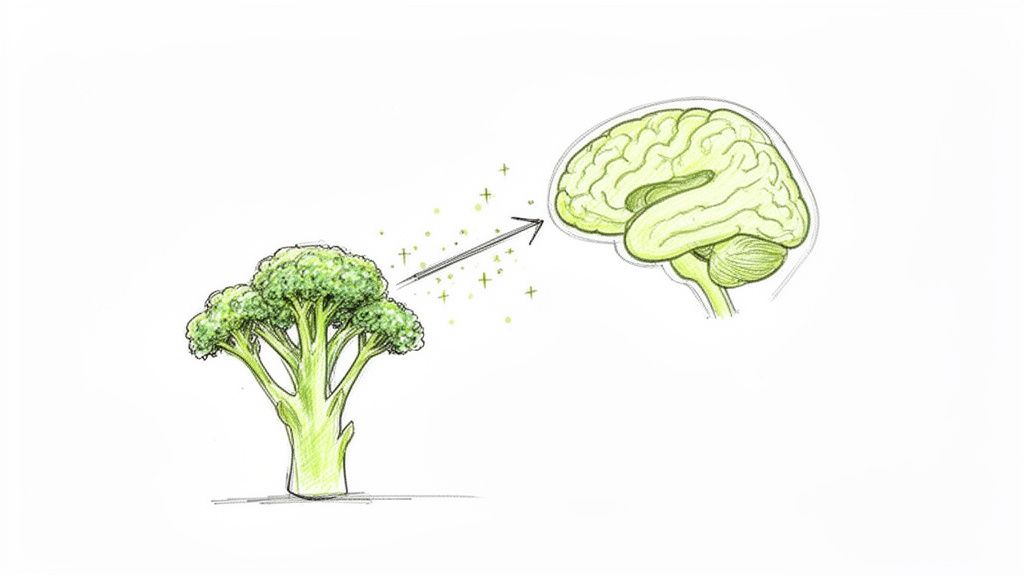
The primary mechanism of sulforaphane that Dr. Patrick highlights is its ability to activate the Nrf2 transcription factor. Nrf2 is often called the "master regulator" of the body's antioxidant response. Once activated, it travels to the cell's nucleus and binds to the Antioxidant Response Element (ARE), upregulating hundreds of protective genes. This process enhances the body's ability to neutralize toxins, reduce inflammation, and combat oxidative stress—a cellular-level imbalance linked to chronic disease.
The benefits of sulforaphane, particularly in neuroprotection and detoxification, are dependent on consistent activation of the Nrf2 pathway. Sporadic intake won't provide the sustained cellular defense needed to counteract daily environmental and metabolic stressors. Dr. Patrick herself uses the supplement brand Avmacol to ensure a consistent, therapeutic dose. This systematic approach is critical for anyone looking to leverage sulforaphane's benefits for reducing neuroinflammation and supporting detoxification pathways in the liver.
Getting a meaningful dose from food alone requires careful preparation. The myrosinase enzyme is heat-sensitive and can be destroyed by cooking, preventing the conversion of glucoraphanin to sulforaphane. Therefore, a deliberate and consistent strategy, whether through consuming raw broccoli sprouts, using a researched supplement, or employing specific food preparation techniques, is essential for efficacy. Without a system, it's easy to miss out on the compound's full potential.
To effectively integrate sulforaphane into your health regimen, consider these evidence-based tips:
Among the supplements Dr. Rhonda Patrick frequently discusses, omega-3 fatty acids hold a place of paramount importance. She emphasizes that these essential fats, particularly eicosapentaenoic acid (EPA) and docosahexaenoic acid (DHA), are crucial structural components of cell membranes, especially in the brain and retina. Dr. Patrick often highlights the widespread imbalance between omega-6 and omega-3 intake in the Western diet, advocating for supplementation to restore a healthier ratio, which is critical for managing inflammation according to the National Institutes of Health (NIH).

Dr. Patrick's advocacy is backed by extensive research linking adequate omega-3 levels to significant health benefits. A key metric she references is the Omega-3 Index, a blood test that measures the percentage of EPA and DHA in red blood cell membranes. She aims for an index of 8% or higher, a level associated in a 2021 cohort study with a five-year increase in life expectancy compared to those with an index below 4%. This data-driven approach underscores why omega-3s are a non-negotiable part of her protocol.
The effectiveness of omega-3 supplementation hinges on achieving and maintaining optimal blood levels, which requires consistent, correct intake. Simply taking fish oil sporadically is not enough to elevate your Omega-3 Index to the protective 8% target. Omega-3s are fat-soluble, meaning their absorption is significantly enhanced when consumed with a meal containing dietary fat. A systemized approach ensures you nail this crucial detail every single day.
For instance, Dr. Patrick splits her dose, taking some with breakfast and some in the evening to maintain stable levels and improve tolerance. This is a nuanced strategy that is easy to forget without a reliable system. By programming these specific timings and linking them to meals in a tracking app, you can automate this best practice. This methodical consistency is what transforms supplementation from a guess into a targeted, effective intervention for long-term brain and heart health.
To integrate omega-3s into your routine effectively, consider Dr. Patrick's evidence-based practices:
Vitamin D3, often called the "sunshine vitamin," is a fat-soluble vitamin essential for immune function, bone health, and mood regulation. Dr. Patrick emphasizes its importance, noting that deficiency is widespread, even for those living in sunny climates. She personally supplements to maintain her blood levels in an optimal range of 40-60 ng/ml. The benefits of Vitamin D for immune and bone health are well-established by organizations like the World Health Organization (WHO).
Dr. Patrick pairs her Vitamin D3 with Vitamin K2 (specifically the MK-7 form). Vitamin K2 works synergistically with D3 to ensure calcium is properly utilized in the body. While Vitamin D3 helps absorb calcium from the diet, Vitamin K2 helps direct that calcium into the bones and teeth and away from soft tissues like arteries, where it can contribute to atherosclerosis (hardening of the arteries). This pairing is crucial for maximizing bone health while supporting cardiovascular wellness.
Because both Vitamin D3 and K2 are fat-soluble, their absorption is significantly improved when taken with a meal containing dietary fat. A systemized approach ensures this critical detail is not overlooked. Dr. Patrick takes these supplements in the evening, which helps establish a consistent routine. Without a system, it's easy to take them on an empty stomach, reducing their effectiveness, or to forget the crucial K2 pairing.
Furthermore, Vitamin D levels can fluctuate based on season and sun exposure. Regular blood testing is key to dialing in the correct dosage. A systematic plan involves not just daily supplementation but also periodic testing (e.g., annually) to adjust the dose as needed, ensuring levels remain in the optimal 40-60 ng/ml range year-round.
Magnesium is an essential mineral that acts as a cofactor in over 300 enzymatic reactions, influencing everything from DNA repair to muscle function and blood glucose control. Dr. Rhonda Patrick frequently highlights its importance, noting that a significant portion of the U.S. population doesn't meet the recommended daily intake. This widespread insufficiency is critical because magnesium plays a pivotal role in regulating the nervous system and promoting restorative sleep.
The mineral's calming effect is largely due to its ability to act as a GABA agonist. GABA (gamma-aminobutyric acid) is the primary inhibitory neurotransmitter in the brain, helping to reduce neuronal excitability. By enhancing GABA activity, magnesium can help quiet the nervous system, leading to a state of relaxation that is conducive to sleep. Dr. Patrick specifically uses magnesium glycinate, a form that is highly bioavailable and less likely to cause gastrointestinal side effects than other forms like magnesium citrate or oxide. As Dr. Patrick emphasizes the importance of minerals like Magnesium for relaxation, it's also worth noting how other science-backed sleep aids, including natural supplements, can contribute to overall well-being and a restorative night's rest.
To leverage magnesium's benefits for sleep and relaxation, timing and consistency are key. Taking it in the evening allows its calming effects to align with your body's natural preparation for sleep. A systemized approach ensures you remember to take it at this optimal time every night.
Sporadic intake is less likely to correct an underlying deficiency or provide the consistent nervous system support needed to improve sleep quality over the long term. By integrating a specific dose and form of magnesium into a daily evening routine, you can more reliably achieve the desired outcomes of improved sleep latency (time to fall asleep) and overall sleep quality.
While widely known as a sports supplement for enhancing muscle strength and power, Dr. Rhonda Patrick highlights creatine for its significant cognitive benefits. Creatine plays a crucial role in cellular energy recycling by helping to regenerate ATP (adenosine triphosphate), the primary energy currency of the cell. This function is vital not only in muscles during exercise but also in the brain, which is an extremely energy-demanding organ.
Research, including studies on sleep deprivation, suggests that creatine supplementation can help support cognitive functions like memory and executive function. Dr. Patrick takes 5-10 grams of creatine monohydrate daily, often mixing it into her coffee. She notes that on days with high cognitive demand, travel, or lack of sleep, she may increase her dose to support brain energy metabolism. For additional context on how other experts structure their supplement routines, you can learn more about other evidence-based supplement protocols here.
To achieve both the physical and cognitive benefits of creatine, it's necessary to maintain saturated creatine stores in your muscles and brain. This requires consistent daily intake, not just on workout days. A systematic approach ensures you take your daily dose regardless of your training schedule, which is essential for reaping the nootropic (brain-enhancing) effects.
Dr. Patrick's method of adding it to her morning coffee is a classic example of habit stacking—linking a new habit to an existing one to ensure consistency. Whether you take 5 grams for maintenance or a higher dose for specific needs, integrating it into a fixed daily routine is the key to its effectiveness.
Alpha-Lipoic Acid (ALA) is a unique and powerful antioxidant compound that plays a critical role inside our mitochondria, the power plants of our cells. Dr. Rhonda Patrick includes ALA in her routine for its capacity to bolster mitochondrial function, combat oxidative stress, and support metabolic health. Its versatility is notable, as it is both water-soluble and fat-soluble, allowing it to exert its protective effects throughout the entire cell.
This dual-action capability makes ALA a key player in cellular energy production and protection. By neutralizing free radicals and helping to regenerate other essential antioxidants like glutathione and Vitamin C, ALA helps maintain a resilient cellular environment. It's important to note, however, that some research has linked ALA supplementation to rare cases of Insulin Autoimmune Syndrome (IAS), as detailed in a 2022 case report series. This underscores the importance of consulting a healthcare provider before use.
To harness the potential benefits of ALA for mitochondrial and metabolic support, consistent daily intake is crucial. Sporadic use is unlikely to provide the sustained protection against oxidative stress or the enhancement in cellular energy that regular supplementation aims to achieve. Dr. Patrick takes ALA with her first meal of the day, a strategy that ensures consistent absorption and maintains steady levels in the body.
The effectiveness of ALA can also be enhanced when combined with other mitochondrial-supporting nutrients. A systematic approach, where you plan and track your entire mitochondrial health stack, ensures that these supplements are taken together at the right times, amplifying their collective impact on cellular energy and long-term health.
Navigating the world of nutritional supplements can feel like an overwhelming task, but Dr. Rhonda Patrick’s approach offers a clear, evidence-based roadmap. As we’ve explored, her regimen isn’t a random assortment of trendy compounds; it’s a strategic framework built on scientific rigor, personalization, and a deep understanding of cellular health. The supplements she recommends, from foundational nutrients like Vitamin D3 and Omega-3s to potent bioactives like sulforaphane, all serve specific, well-researched purposes aimed at optimizing long-term health and resilience.
The core philosophy is not about simply copying her list. Instead, it's about adopting her methodology. This involves understanding your unique biological needs through testing, identifying potential nutritional gaps, and using high-quality supplements to address them systematically. The real power in understanding what supplements does Rhonda Patrick recommend lies in learning why she recommends them. She prioritizes compounds that support fundamental biological processes: robust immune function (Vitamin D3), cellular detoxification (sulforaphane), cardiovascular integrity (Omega-3 fatty acids), and cellular energy (Creatine).
The journey from learning to doing is where true health transformation happens. Here are the most crucial principles to integrate into your own wellness strategy, inspired by Dr. Patrick's data-driven approach:
Adopting these principles requires a structured approach. Start by discussing your health goals and potential supplement needs with your healthcare provider. They can order the necessary blood tests and help you interpret the results in the context of your overall health profile.
Once you’ve identified one or two key supplements to begin with, the next challenge is consistency. This is where modern tools can make a significant difference. Integrating your new supplement regimen into a dedicated health tracking app can be a game-changer. For instance, an app like Heart Fit allows you to not only log your supplements but also to set reminders, track your corresponding biomarkers (like your Omega-3 Index or Vitamin D levels) from your lab tests, and observe how your consistency impacts your health data over time. This creates a powerful feedback loop that motivates continued adherence and transforms a daily task into a rewarding habit.
Ultimately, Dr. Patrick’s supplement recommendations provide an invaluable template for anyone serious about proactive health. By embracing her scientific mindset, prioritizing testing, and leveraging tools to ensure consistency, you can move beyond passively following advice and begin actively building a personalized, effective, and sustainable wellness routine that serves you for years to come.
Ready to turn knowledge into a daily habit? Building a consistent supplement routine is the key to seeing real results, and Heart Fit is designed to help you do just that. Use the Heart Fit app to schedule your supplements, track your progress alongside key heart-health metrics, and build the science-backed habits that lead to lasting wellness.
Download HeartFit.ai and start your 66-day journey today.


Join the #hearthealth crowd who are leveling up their heart health with HeartFit.ai