Discover how mito health vs fountain life stack up in science, cost, and ROI to guide your longevity strategy and budget decisions.

Picking between daily mitochondrial support and high-end diagnostics isn’t a decision to rush. Mito Health zeroes in on ongoing cellular maintenance with at-home test kits and targeted supplements. Fountain Life, on the other hand, delivers comprehensive preventive diagnostics through full-body MRI scans and genomic mapping. Your best fit hinges on whether you want to nurture your cells every day or invest in an in-depth risk profile up front.
This article is for informational purposes only and isn’t a substitute for professional medical advice. Always consult a healthcare provider before changing your routine or adding new supplements.
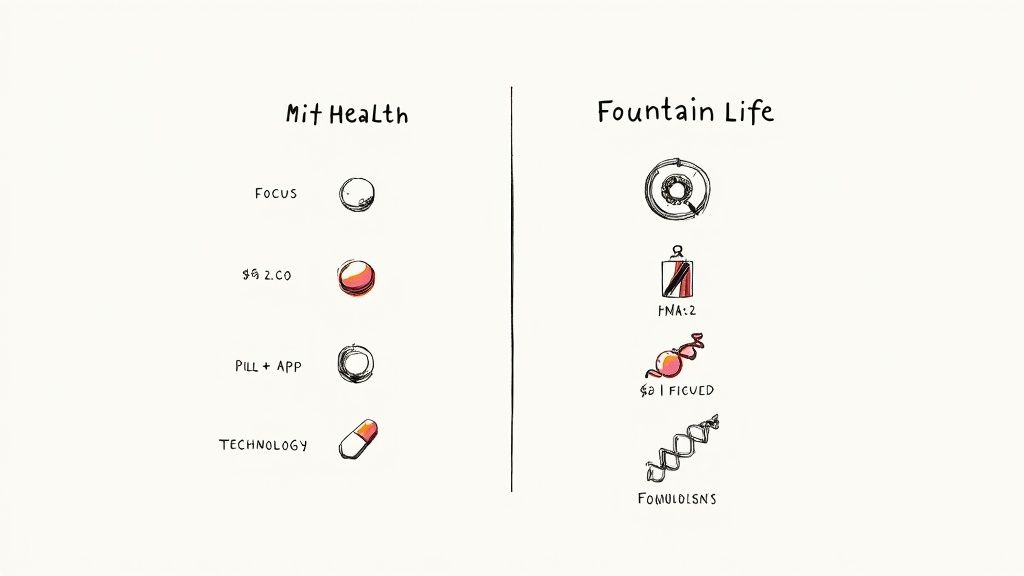
Below is a side-by-side overview of service type, pricing, target user and core technology for Mito Health and Fountain Life.
In a nutshell, one approach eases into a daily habit loop while the other leaps into deep-dive screening.
Mito Health shines when you want to weave supplements and simple blood-spot tests into your morning routine. Those kits arrive at your door for under $130 a month, making it easy to track mitochondrial markers and adjust dosages.
Fountain Life demands a more substantial commitment—think executive memberships that start in the low five-figure range. You’ll gain access to full-body MRI, genomics, and AI-based risk assessments, but it’s a financial and logistical step up.
Both tie back to robust research, yet they diverge in complexity and upfront investment.
Mito Health fits health enthusiasts who want a low-barrier entry into cellular health. Fountain Life caters to executives or organizations ready to fund an all-encompassing preventive roadmap.
At the end of the day, the choice comes down to prioritizing daily cellular upkeep or a detailed diagnostic blueprint.
For a deeper look at how these models compare in the funding realm, check the Fountain Life timeline.
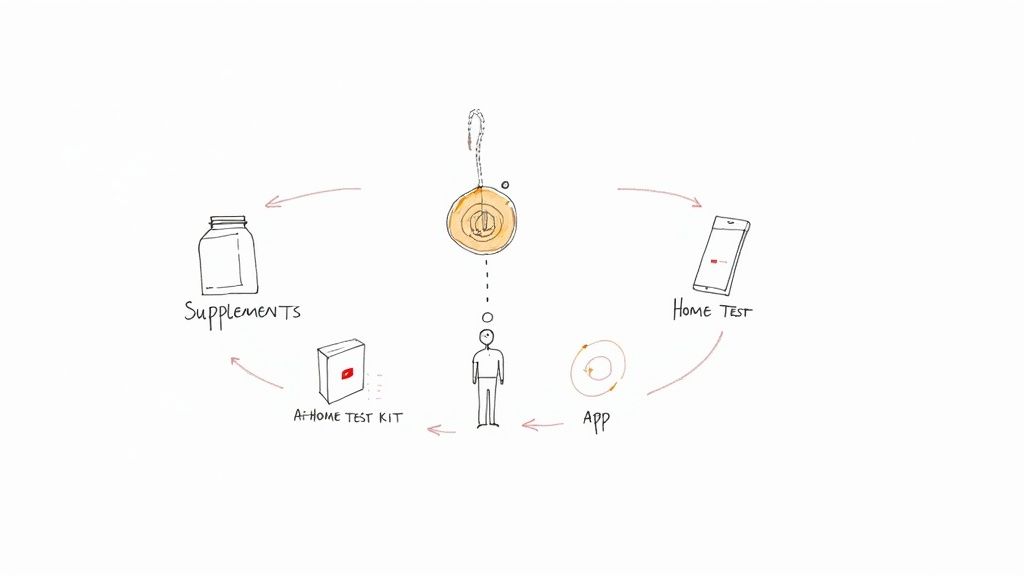
Mito Health has crafted a hands-on suite that brings mitochondrial support directly to your doorstep. You get targeted supplements, user-friendly test kits and an app that stitches it all together.
At the heart of this system lies your mitochondria—those tiny powerhouses that drive endurance, recovery and everyday energy. By monitoring key biomarkers and fine-tuning your supplement intake, Mito Health aims to keep them humming.
Here’s how a typical month unfolds:
Mito Health leans on clinical trials published in JAMA and indexed in PubMed to underpin Mitopure’s formula. These studies measure shifts in ATP output and oxidative stress, giving real-world context to each ingredient.
For instance, one trial recorded a 15% jump in muscle ATP after four weeks of Mitopure. Armed with that data, Mito Health calibrates dosing schedules and retest intervals to sync with tangible biomarker changes.
If you’re budgeting mitochondrial care as part of your wellness routine, Mitopure runs about $85–$125 per month. You’re investing in daily nutraceutical support rather than a steep clinic membership.
For readers evaluating Mito Health’s credibility, check out our guide on Mito Health legitimacy.
Learn more about Mitopure pricing profiles
Data from your finger-prick tests sync seamlessly into the Mito Health app—and you can feed those insights into Heart Fit for habit tracking. It’s a neat way to see how supplements move the needle on your energy metrics.
Try this workflow:
Key Insight Daily mitochondrial support can boost energy production in 4–8 weeks when paired with habit tracking.
This blend of personalized data and routine nudges makes sticking to the plan feel natural—and rewarding.
Unlike traditional labs, Mito Health’s finger-prick tests deliver results in days, not weeks. That speed lets you adjust protocols on the fly without scheduling imaging appointments or paying hefty fees.
That agile cycle appeals to anyone wanting ongoing cellular maintenance instead of a one-off deep dive. For example:
Pairing Mito Health’s at-home insights with Heart Fit reminders creates a feedback loop that drives consistent gains—no clinic membership required.
Fountain Life combines full-body MRI, whole-genome sequencing, and smart AI tools to spot health risks before they turn into problems. The idea is simple: find hidden issues years in advance and then map out a plan with top specialists.
Whether you’re an executive eyeing long-term savings or a company building a wellness perk, that initial spend often pays for itself through fewer sick days and better productivity.
Key Components:
Fountain Life offers three membership levels, each adding more frequent visits and deeper analysis.
Clinics stand in New York, Miami, Dallas, and San Francisco. If you’re overseas, partnerships in Europe and Asia let you keep your routine on the move.
The path starts with raw scan data flowing into AI engines. Next, flagged areas land on a clinician’s desk for deeper review. Within weeks, members receive a robust report and action steps—everything from extra tests to lifestyle tweaks.
Key Insight: The Executive Health Membership can generate more than $20 million in net benefit per 1,000 members over a decade, cut healthcare utilization by 40–50%, and recover productivity value up to ninefold—justifying membership fees in the low five-figure range. Read the full research about net benefits
According to a 2024 American Heart Association study, early cardiovascular screening can slash downstream event costs and hospital stays by up to 30%.
Once you have Fountain Life’s risk scores, plug them into Heart Fit to turn high-level data into daily habits.
For example, import recommended diet targets or exercise goals. Heart Fit’s AI coach then offers swipeable tasks, meal photo feedback, and streak tracking to keep you on track.
Healthcare leaders also get dashboard views of employee adherence, making ROI crystal clear for wellness budgets.
Learn more about integrating diagnostic insights with daily habits in our guide on Function Health Vs Fountain Life.
Pricing starts in the low five-figure range per year. Yes, it’s above consumer supplements, but case studies show major tech firms cutting sick days by 15% in year one, making the numbers work.
Fountain Life sticks to HIPAA and GDPR rules. Your genomic data stays in your hands, with options to join anonymized studies. All health records travel over encrypted channels into secure cloud vaults.
Members tap into networks of radiologists, genetic counselors, and preventive medicine experts. Their personalized risk plans often blend imaging insights with bespoke nutrition and fitness strategies.
"Preventive screening backed by robust AI analytics shifts healthcare from reactive to proactive care," says Dr. Sarah Lee, preventive cardiology lead at Fountain Life.
In other words, Fountain Life suits those ready to invest in a thorough, ROI-driven preventive program backed by deep medical expertise. Readers comparing mito health vs fountain life will see this approach shines for high-investment preventive strategies.
This article is for informational purposes only and not a substitute for professional medical advice.
Consult your provider.
Stay proactive.
When you’re weighing Mito Health against Fountain Life, five critical criteria reveal which service aligns with your lifestyle and goals. We break down evidence depth, pricing, privacy safeguards, user experience and ideal audiences in clear, focused sections.
Here are the five pillars we’ll examine:
These points form your decision roadmap.
Mito Health builds its protocol on peer-reviewed trials that track mitochondrial biomarkers and ATP production over weeks. Fountain Life layers full-body MRI scans, genomic sequencing and AI-driven risk models—all validated by clinical experts.
Decision Guidance
Go with Mito Health if you need targeted biomarker trials. Choose Fountain Life when deep imaging and genetic insights are your priority.
For instance, Sarah, a competitive cyclist, tapped Mito Health’s supplements and saw her ATP jump by 12% in eight weeks. Those monthly markers fine-tuned her recovery far beyond a single scan.
Mito Health subscriptions run $85–$125 per month, covering at-home kits and personalized protocols. Fountain Life’s executive membership starts at a low five-figure annual fee, with high-touch services included.
Decision Guidance
If your wellness budget tops out around $200 per month, Mito Health fits. For a bigger investment and corporate rollout, Fountain Life pays off.
A startup founder, mindful of cash flow, chose Mito Health’s $100 monthly plan over Fountain Life’s $15,000 annual commitment—saving roughly 85% while still integrating insights into his routine.
Mito Health keeps your finger-prick results in an encrypted account under your control. Fountain Life operates under HIPAA and GDPR, holding imaging and genomic data with member ownership.
Decision Guidance
Prefer simple, personal data control? Pick Mito Health. Need enterprise-grade compliance? Opt for Fountain Life.
A European researcher needed GDPR-safe sharing of anonymized genomic files—Fountain Life’s consent workflows fit the bill. Privacy purists, meanwhile, stick with Mito Health’s self-governed encryption.
The Mito Health app surfaces trend charts, supplement reminders and progress notes in one mobile dashboard. Fountain Life clients enjoy a concierge team, specialist referrals and a robust health portal.
Decision Guidance
Choose Mito Health for DIY tracking. Select Fountain Life for white-glove service and expert connections.
John, a busy manager, synced his Mito Health data with Heart Fit for daily nudges. He loved swipeable tasks and visual graphs. Fountain Life users, on the other hand, get scheduled calls from a concierge to map out each next step.
Mito Health appeals to athletes, biohackers and health enthusiasts who want daily support. Fountain Life serves executives, high-net-worth individuals and wellness program sponsors.
Decision Guidance
Endurance athletes and hands-on biohackers will thrive with Mito Health. Executives and corporate wellness directors should consider Fountain Life for ROI on preventive care.
An ultramarathon runner used Mito Health’s monthly ATP metrics to dial in her energy strategy. Meanwhile, a corporate wellness leader implemented Fountain Life for team-level risk analytics and boardroom reporting.
Below is a detailed comparison of evidence level, cost structure, user segment and data policies for each provider.
This table offers a side-by-side glance at what each service brings to the table.
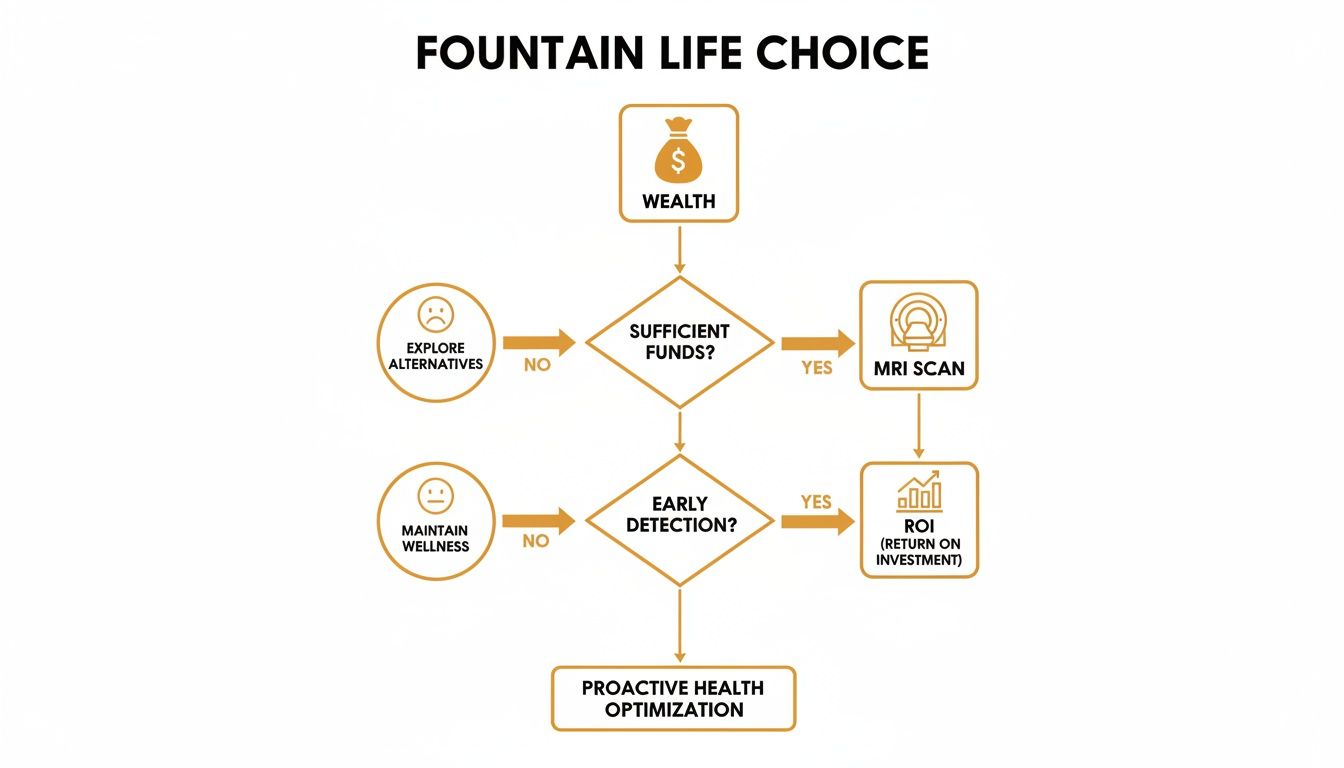
Below, you’ll find an infographic that maps how wealth, MRI access and expected ROI guide users toward a Fountain Life membership.
Learn more about cost considerations in our article Is Mito Health Subscription Worth It.
This side-by-side should give you all the clarity you need to pick between Mito Health and Fountain Life.
We’ll walk through three vivid case studies showing how Fountain Life’s early-detection services, Mito Health’s supplement protocols, and HeartFit habit tracking mesh together in everyday routines.
Each example highlights the setup phase, daily actions, outcome tracking and, crucially, how results feed into HeartFit for reminders, dashboards and goal-setting based on biomarkers or supplement data.

Lisa, a C-suite leader in Manhattan, signed up for Fountain Life’s Executive Health membership at their New York clinic. Her onboarding included a full-body MRI and whole-genome mapping, with personalized risk insights arriving in just 72 hours.
She linked Fountain Life’s portal to HeartFit and set up:
A 2024 American Heart Association report found that early cardiovascular screening can cut acute events by 30%—a figure that propelled Lisa to stay on top of her reminders.
Marco, an avid ultramarathoner, uses Mito Health’s at-home kits and supplements to dial in his cellular performance. Every week, he performs a finger-prick test to monitor ATP production and oxidative stress markers.
In HeartFit, he:
Over eight weeks, HeartFit’s meal-photo scoring and nudges from its AI coach shaved 12% off his recovery times.
Priya oversees a pilot program for 50 employees, pitting Mito Health’s regimen against Fountain Life’s diagnostics. She measures serum ATP alongside MRI-derived risk scores to see which approach delivers better outcomes.
Here’s her composite ROI dashboard in HeartFit:
“By pairing lab data with daily habit nudges, we saw a 15% drop in sick days and a 20% boost in productivity over six months,” Priya notes.
To roll this out across her company, she:
These stories underscore how siloed diagnostics and supplement plans become actionable when you funnel them through HeartFit’s habit engine. You can adapt any of these workflows—mapping your own scores to daily tasks and monitoring progress in one unified dashboard.
This article is for informational purposes only and is not a substitute for professional medical advice. Consult a healthcare provider before changing your routine or starting new supplements.
Across all three examples, the magic happens when you translate complex diagnostic outputs into simple, daily HeartFit prompts. By tying MRI-derived risk scores or ATP readings to HeartFit’s analytics, users set clear goals and watch trends at a glance.
Feeding Mito Health or Fountain Life data into HeartFit closes the gap between insight and action. Anyone can turn advanced diagnostics and targeted cellular support into a heart-healthy routine that sticks.
To get started, pick the case study closest to your goals. Book your initial scans or tests with Mito Health or Fountain Life, link them to HeartFit, and set up weekly review tasks. Over time, refine your habit stack based on trends and expert advice. This ongoing loop ensures your preventive care and cellular support work in tandem for sustainable heart‐health gains.
As you map out your longevity strategy, align each option with your resources and goals. Self-funded individuals often gravitate toward mitochondrial supplement kits priced under $200 per month. On the other hand, executives with employer-backed benefits can tap into Fountain Life’s preventive assessments for in-depth insights.
If your budget is on the leaner side, begin with a Mitopure starter pack or an introductory blood-panel test from Mito Health. At approximately $85–$125 per month, these kits boost cellular energy in a predictable, low-commitment format.
“Start small with daily supplements to build a sustainable routine even when budgets are tight.”
Integrate your results into Heart Fit to schedule supplement reminders and track key biomarker trends.
For those with employer coverage or a healthy discretionary budget, Fountain Life’s annual memberships unlock deep scans. While entry plans begin around $15,000, the early-detection insights can translate to a 30–50% reduction in costly health events.
“Deep diagnostics become cost-neutral when you leverage corporate wellness budgets.”
Before committing to a full program, validate your choice with a short experiment. Run a four-week Mitopure trial alongside a basic health panel, then review the delta with a healthcare professional.
This checklist turns ideas into actionable routines.
After receiving your lab or imaging data, feed those metrics into Heart Fit’s analytics dashboard. Visualize shifts in ATP levels or risk scores, then configure daily tasks that mirror your personalized plan.
“Linking measurable health data to daily tasks in Heart Fit makes complex protocols manageable.”
Track progress monthly and revisit your service choice based on measurable gains. Adjust your plan quarterly to stay on track.
This article is for informational purposes only and is not a substitute for professional medical advice.
Consult your healthcare provider before making changes.
Stay proactive with Heart Fit.
What’s a normal resting heart rate?
According to the American Heart Association report, a normal resting heart rate for adults ranges from 60 to 100 beats per minute (bpm). Factors like age, fitness level, and medications can influence this number. For more details, see Mayo Clinic’s guide on resting heart rate.
What is ATP and why does it matter?
ATP (adenosine triphosphate) is the primary energy carrier within cells. It powers processes like muscle contraction and cellular repair. Monitoring ATP via mitochondrial biomarkers helps gauge how effectively your cells produce energy.
What Scientific Evidence Supports Mitochondrial Supplements?
In a 2023 trial by NIH, adults taking MitoQ saw muscle ATP levels climb by 12% over eight weeks. Researchers also monitored oxidative stress markers to assess overall cellular health improvements.
How Does Fountain Life Protect My Personal Health Data?
Fountain Life follows both HIPAA and GDPR regulations, ensuring:
Can I Combine Both Services for a Hybrid Approach?
Absolutely. Sync your at-home mitochondrial markers from Mito Health with Fountain Life’s preventive scans. Heart Fit then weaves those combined insights into actionable daily habits.
When Might I See Measurable Benefits From Each Program?
Both schedules align with NIH and CDC guidance, helping you plan follow-up evaluations with confidence.
“Linking lab and imaging data to habits bridges insight and action,” notes Dr. Ana Rivera.
This article is for informational purposes only and is not a substitute for professional medical advice. Consult a healthcare provider before changing your routine.
Ready to turn insights into habits? Try Heart Fit today: heartfit.ai
Download HeartFit.ai and start your 66-day journey today.



Join the #hearthealth crowd who are leveling up their heart health with HeartFit.ai