Explore our in-depth Function Health vs Fountain Life comparison to see which proactive health service aligns with your goals for longevity and wellness.
At its heart, the difference between Function Health and Fountain Life boils down to scale and approach. Function Health is all about accessible, data-rich wellness tracking using deep-dive blood analysis. In contrast, Fountain Life offers a premium, high-tech service that leans on advanced imaging to catch disease early and promote longevity.
Your choice really hinges on what you’re trying to achieve: ongoing, foundational health optimization or a maximum-effort strategy for preventing disease.
This article is for informational purposes only and is not a substitute for professional medical advice. Always consult a healthcare provider before making any changes to your lifestyle or health regimen.
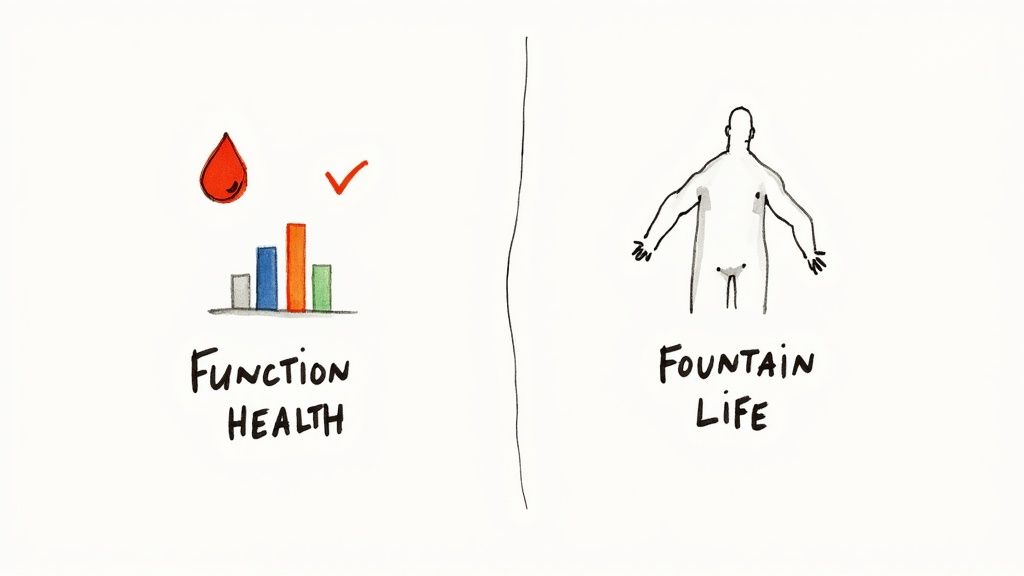
Trying to navigate the world of proactive health can feel overwhelming. New services are popping up constantly, all promising a clearer picture of what’s going on inside your body. Function Health and Fountain Life are two of the biggest names out there right now, but they offer fundamentally different paths to health optimization.
Figuring out their core differences is the first real step in deciding which one, if any, aligns with your personal health goals, philosophy, and budget. This guide will cut through the marketing noise and give you a straight, side-by-side comparison. We're going beyond just listing features to really dig into their testing methods, clinical support, and the actual value you get for your money.
Function Health is built on a foundation of making comprehensive data accessible. It’s designed for people who want to actively manage their health by tracking over 100 key biomarkers, spotting trends, and making smart lifestyle choices based on what the numbers say. This naturally appeals to wellness enthusiasts, biohackers, and anyone who just wants a thorough baseline of their internal health without breaking the bank.
Fountain Life plays in a different arena entirely. It targets a premium market focused squarely on early detection and extending one's "healthspan." Their method is less about routine tracking and more about intensive, periodic screenings with heavy-hitting tech like full-body MRIs and CCTA scans. This service is often considered by executives, high-net-worth individuals, or those with a strong family history of diseases like cancer or heart conditions, where catching something early is the absolute top priority.
For a clearer picture, here’s how they stack up side-by-side.
This table breaks down the essential differences between the two services to help you quickly see where they diverge.
In short, Function Health gives you a detailed blueprint of your current health status through bloodwork, empowering ongoing adjustments. Fountain Life uses powerful imaging to scan for potential future problems, offering a snapshot of potential risks before they manifest.
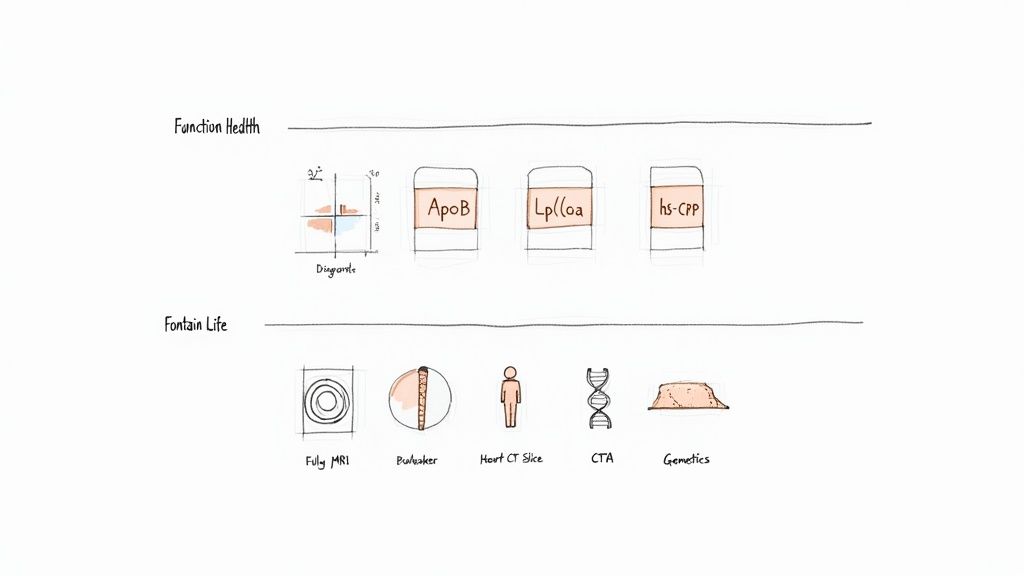
When you put Function Health and Fountain Life side-by-side, their core difference is immediately clear. It’s a classic case of looking at the body’s "software" versus its "hardware."
Function Health is all about your body’s biochemistry—the dynamic, real-time data running in your system. Fountain Life, on the other hand, is focused on the physical structure, scanning the hardware for early signs of trouble. This distinction is everything; it shapes the insights you get and the actions you’ll take.
Think of it this way: Function Health tells you what's happening right now through deep blood analysis. Fountain Life uses advanced imaging and genetics to find what might happen years down the road.
Function Health's entire model is built on one thing: incredibly comprehensive lab work. By analyzing over 100 biomarkers, it gives you a granular look at your body's current operational status, going far beyond what you'd see in a typical annual check-up.
They zero in on a few critical areas:
This approach is perfect for anyone looking to optimize their current health, dial in their nutrition and fitness, and track the impact of their changes with hard data. To see just how deep they go, check out the complete Function Health biomarkers list.
Fountain Life operates on a "detect and prevent" philosophy. While blood work is part of their package, their real headliners are the high-tech diagnostics aimed at catching serious diseases before they even have a chance to show symptoms.
Their primary tools are heavy-hitters:
The entire premise of Fountain Life is that major killers like cancer and heart disease are most treatable when caught at "Stage 0." Their tech stack is specifically chosen to make that early detection possible.
This service is a better fit for someone with a family history of serious disease, a higher risk tolerance for what they might find, or anyone prioritizing longevity who is ready to make a significant financial investment in proactive screening. To get a sense of how different companies package these types of services, you can look into what's offered by providers like xlr8well's diagnostic services.
In short, your choice depends entirely on your personal health goals. Are you looking to fine-tune the engine you have today, or do you want to scan the chassis for hidden structural weaknesses that could cause problems later?
Disclaimer: This article is for informational purposes only and is not a substitute for professional medical advice, diagnosis, or treatment. Always seek the advice of your physician or other qualified health provider with any questions you may have regarding a medical condition. We encourage you to consult a healthcare provider before making any lifestyle or medication changes.
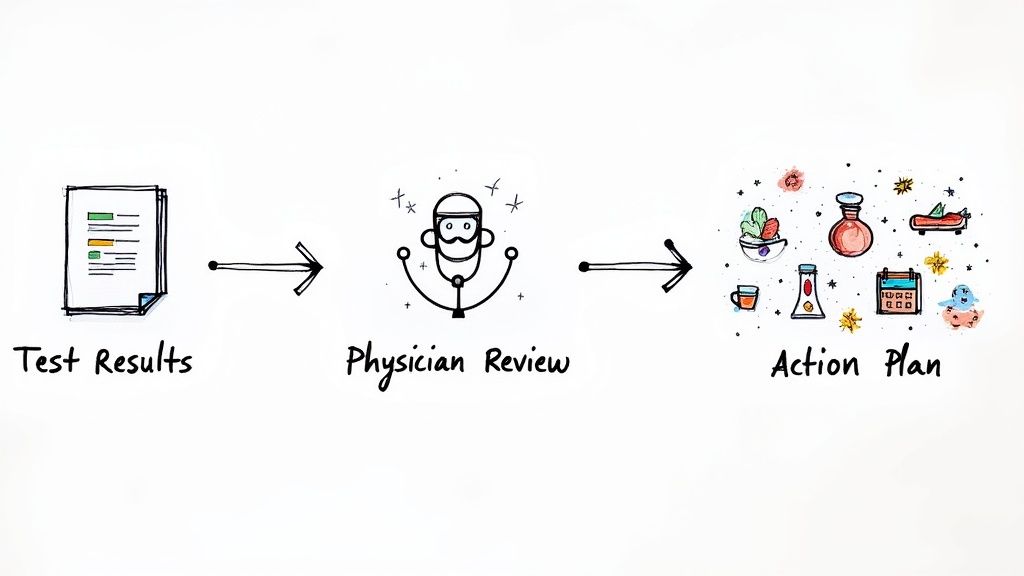
Getting a mountain of health data is one thing. Actually understanding what it means and what to do next is a completely different ballgame. This is where the real differences between Function Health and Fountain Life start to surface, moving beyond what they test to how they guide you forward. The true value isn’t in the raw numbers or slick images; it’s in turning all that information into a clear, personalized health strategy.
These two services approach clinical support from opposite ends of the spectrum. Function Health offers a streamlined, digital-first experience made for accessibility, while Fountain Life delivers a high-touch, concierge model built on direct physician engagement. Your personal preference for autonomy versus intensive guidance will likely be the biggest factor in your decision.
Function Health's model is perfectly suited for the modern, proactive person who wants to take charge of their health. Once your lab results are in, they pop up on a digital dashboard, visually mapping your biomarker levels against optimal ranges. A physician from their team then reviews everything and provides a written summary with insights and general recommendations.
Typically, their action plans zero in on:
This approach really empowers you to own your health journey, using the platform as your guide. It’s a fantastic fit if you're self-motivated, comfortable looking at data, and ready to implement changes on your own. For a deeper dive into what this feels like for actual users, check out the various Function Health customer reviews available online.
The genius of Function Health's support model is its efficiency and accessibility. It delivers physician-reviewed insights at a scale and price point that traditional medicine can't touch, opening up data-driven health management to a much broader audience.
Fountain Life, on the other hand, is all about deep, personal clinical engagement. The process doesn’t just end with a report—it actually begins there. You'll have an in-depth consultation with a dedicated physician who walks you through every single finding from your imaging scans, genetic tests, and blood work. This isn't just a quick review; it's a collaborative strategy session to map out your long-term health.
This high-touch model includes:
This concierge service is built for people who want an expert partner guiding their health journey. According to organizations like the American Heart Association, interpreting complex cardiovascular risk factors demands clinical expertise—a role Fountain Life’s physicians fill directly and personally. The Function Health vs Fountain Life debate often comes down to this single point: do you want a digital guide or a personal medical concierge?
Disclaimer: This article provides general information and is not a substitute for professional medical advice. Please consult with a qualified healthcare provider before making any changes to your diet, exercise routine, or health plan.
When you stack Function Health against Fountain Life, the price tag is where you'll see the starkest difference. Function Health is all about making deep health tracking accessible for regular, ongoing use. Fountain Life, on the other hand, positions itself as a top-tier, premium investment in hardcore, long-term disease prevention. Getting a handle on their pricing is key to figuring out which one actually makes sense for your wallet and your health goals.
This isn't just about personal choice; it reflects a massive shift in how people approach wellness. The market for functional foods and beverages—a cornerstone of this proactive health movement—is growing rapidly. According to a report by Fortune Business Insights, the global functional food market was valued at USD 281.14 billion in 2023 and is projected to grow significantly. As more of us put serious money into our health, knowing what we're getting for that investment is more important than ever.
Function Health keeps things simple with an annual membership model. You pay one fee for the year, and that gets you a huge panel of lab tests covering more than 100 biomarkers, access to their digital platform to see your results, and a physician's review of your data. The entire model is built around being affordable and consistent.
The value here is pretty straightforward: you get regular, data-heavy health monitoring for a predictable price. It's a fantastic option if you want to set a health baseline, see how lifestyle changes are actually affecting your body, and stay on top of your wellness without having to drop a huge amount of cash all at once. For a more granular view of what that membership includes, our guide on the Function Health membership cost breaks it all down.
This approach takes advanced biomarker testing out of the exclusive realm of biohackers and puts it into the hands of everyday people trying to live healthier. It gives you the power to be an active participant in your own health journey, year after year.
Function Health’s real power is in the recurring, longitudinal data. It offers an affordable way to watch your health trends over time, allowing you to make small, smart adjustments to your lifestyle.
Fountain Life is on a completely different planet when it comes to cost. Their pricing is built around tiered packages and high-end memberships, like their "APEX" offering, which bundles a suite of advanced diagnostics. These packages are a major financial commitment, often running into the tens of thousands of dollars.
That hefty price tag covers more than just the tests, which include things like full-body MRIs, CCTA scans, and deep genetic analysis. It also pays for the high-touch, white-glove clinical support that comes with it. You get in-depth consultations with a dedicated team of physicians who help you understand the complex results and build a personalized, long-term health plan.
The "better value" really comes down to your personal priorities, how you view risk, and what your bank account looks like. There's no single right answer.
Function Health is the clear winner for:
Fountain Life's premium price makes sense for:
In short, Function Health offers incredible value for continuous, data-driven health management. Fountain Life provides a different kind of value—the peace of mind that comes from maximum-effort early detection, though it comes at a price that firmly places it in the luxury health category.
Disclaimer: This article is for informational purposes only. Always consult a healthcare provider before making any changes to your health regimen or financial decisions related to your care. The content herein is not a substitute for professional medical advice.
Getting a detailed report from a service like Function Health or Fountain Life is a huge first step. But that data is just a set of numbers on a page until you do something with it. A report showing high ApoB or inflammation markers is the starting pistol, not the finish line. The real work begins when you translate those insights into consistent, daily habits.
This is where integrating your health data with a lifestyle tracking tool becomes non-negotiable. It’s the bridge between knowing your risks and actively lowering them, day in and day out.
Think of it this way: the insights you get are the "what," and a dedicated tracking app is the "how." For example, if your Function Health report flags elevated hs-CRP (a key inflammation marker), your action plan will probably include more anti-inflammatory foods. Or, if a Fountain Life CCTA scan reveals early plaque buildup, your priority becomes aggressive lipid management through diet and exercise.
This is where a specialized app can make all the difference, turning those broad recommendations into specific, manageable daily tasks. Proactive health is all about creating new routines, and tools can guide you on how to interpret and act on your body's signals. For instance, learning about effective habits for improving HRV is great, but an app helps you implement and stick with those habits until they become second nature.
Sure, plenty of apps can track calories or steps, but for this purpose, you need something more targeted. The best apps help you connect your lab results directly to your grocery list, workout schedule, and supplement routine.
Here are a few of the best for translating your health data into meaningful action:
The goal is to build a feedback loop. Your Function Health or Fountain Life report gives you the starting coordinates. An app like HeartFit acts as your daily GPS, guiding your choices and helping you navigate toward better health.
The move toward proactive health is picking up serious steam. The World Health Organization (WHO) highlights that modifiable behaviors like unhealthy diet and physical inactivity are major drivers of noncommunicable diseases, reinforcing the importance of daily lifestyle choices.
This trend highlights why the right tools are so important for long-term success. A key difference in the Function Health vs. Fountain Life debate often boils down to how their insights are applied day-to-day. Function Health's detailed biomarker reports are perfect for the kind of continuous, data-driven feedback loop that habit apps provide, letting you make small, frequent adjustments. Fountain Life’s more structural findings (from imaging) create a long-term roadmap that can also be broken down and managed with daily preventative actions in a dedicated app.
Ultimately, it doesn't matter which service you choose. Pairing it with a solid lifestyle tracking tool is what will transform a one-time assessment into a living, breathing health strategy that works for you.
Disclaimer: This article is for informational purposes only and is not a substitute for professional medical advice. Always consult a healthcare provider before making lifestyle or medication changes.
Choosing between Function Health and Fountain Life isn’t about crowning a winner. It’s about matching a service to your personal health philosophy, your budget, and where you are in life. The right choice hinges on a simple question: are you trying to fine-tune your current wellness, or are you scanning the horizon for long-term health risks?
Put another way, are you focused on optimizing your body's current function, or are you investing in a long-term fountain of youth strategy? Your answer will point you directly to the service that fits.
Picture a 35-year-old biohacker or committed wellness enthusiast. They're already in great shape but want to push their performance to the next level. They live for data, love tracking their metrics, and are eager to make lifestyle tweaks based on hard numbers. For this person, Function Health is the clear choice.
Its deep biomarker panel delivers the granular data they're after—tracking markers like ApoB for cardiovascular risk and hs-CRP for inflammation. The platform's more accessible price point and yearly testing cycle are perfect for seeing how changes in diet, supplements, or fitness routines play out over time. This user wants to optimize, not necessarily screen for rare diseases, making Function Health’s data-heavy model a perfect match.
Now, think about a 55-year-old executive with a demanding career and a family history of heart disease or cancer. Their main concern isn't just today's wellness; it's about proactively spotting and heading off major health threats before they even start. For this individual, Fountain Life offers a far more compelling value proposition.
The significant investment buys access to advanced imaging like full-body MRIs and CCTA scans—tools built for the earliest possible detection of structural problems. The concierge, physician-led approach is essential for making sense of complex results and building a serious, long-term health roadmap. This user values peace of mind above all and is willing to pay a premium for it.
Your personal health goals, your tolerance for risk, and what you're able to invest are the three pillars of this decision. Function Health gives you the tools for the day-to-day journey of wellness management. Fountain Life provides a comprehensive, high-stakes reconnaissance mission for your future health.
This split actually mirrors what's happening in the wider consumer health market. According to a market analysis from Future Market Insights, the functional beverage market is segmented by product types that address different needs—from immediate energy to long-term health benefits. This divide between immediate function and long-term healthspan is exactly what we see with Function Health and Fountain Life.
This flowchart shows how data from either service can be funneled into real, actionable daily steps.
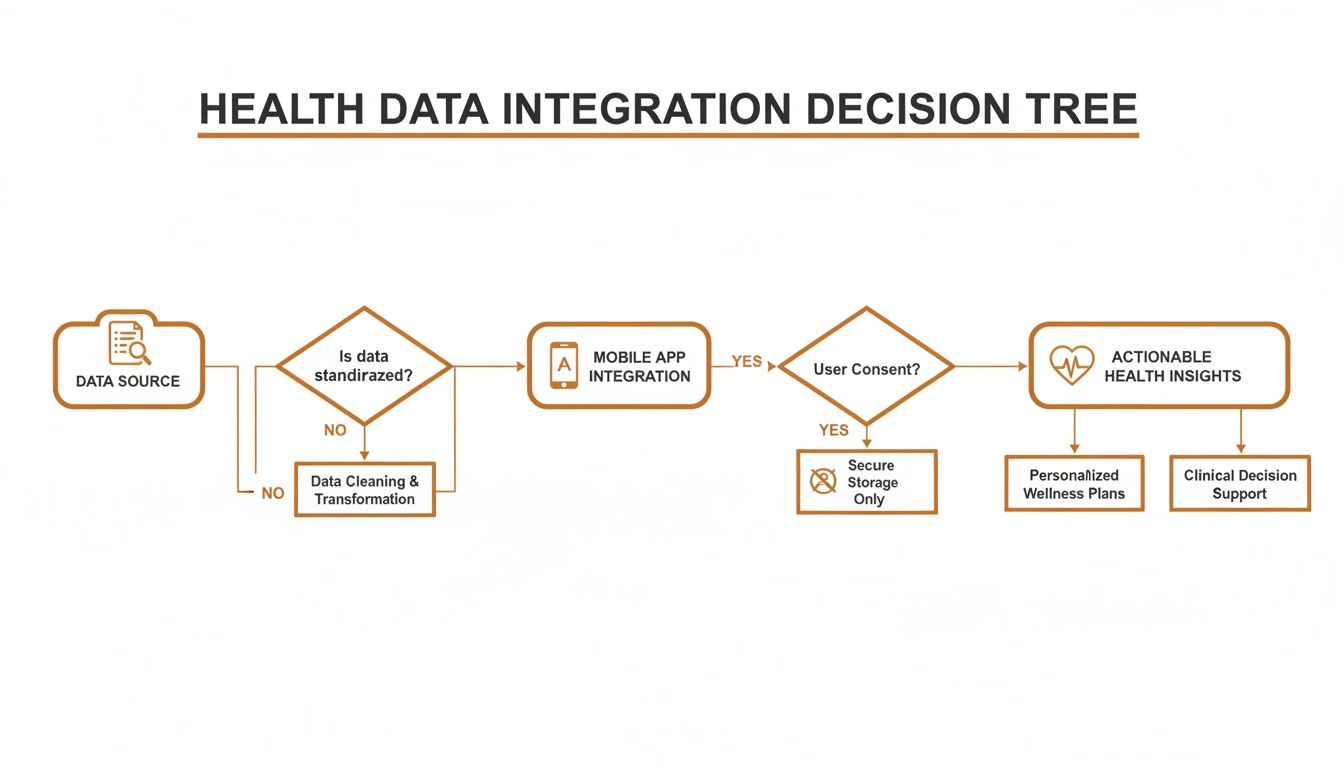
The key takeaway here is that regardless of where it comes from, health data is only useful when you integrate it into a consistent lifestyle using dedicated tools and daily habits.
Ultimately, the best service is the one that actually gets you to take meaningful action. Whether that’s through the continuous data stream from Function Health or the deep diagnostic snapshot from Fountain Life, the goal is the same: giving you the information you need to live a healthier, longer life.
Disclaimer: This article is for informational purposes only and is not a substitute for professional medical advice. Always consult with a qualified healthcare provider before making any decisions about your health or treatment.
When you're digging into proactive health services, a few practical questions always come up. Let's tackle some of the most common ones about Function Health and Fountain Life, from payment to privacy, so you can make a clear-headed decision.
Most of the time, proactive and preventive services like these are considered elective wellness programs, so they’re not covered by standard insurance plans. You should plan on paying for them out-of-pocket.
That said, you might be able to use funds from a Health Savings Account (HSA) or Flexible Spending Account (FSA). It's definitely worth checking with your specific HSA/FSA provider to see if these services qualify, as their rules can differ quite a bit.
Both Function Health and Fountain Life are bound by the Health Insurance Portability and Accountability Act (HIPAA), the federal law designed to keep your sensitive health information safe. They use encrypted servers and have strict internal rules to protect your privacy.
Before signing up for any health service, it’s always a good idea to read through their specific privacy policy. This will tell you exactly how they store, use, and share your data.
This is where the two services really diverge. The experience couldn't be more different.
According to the American Heart Association, a normal resting heart rate for most adults is between 60 and 100 beats per minute (bpm). However, factors like fitness level, age, and medications can affect this range.
Disclaimer: This article is for informational purposes only. It is not a substitute for professional medical advice, diagnosis, or treatment. Always talk with your doctor or another qualified health provider before making any changes to your health regimen.
Turning your lab results into lasting daily habits is the key to taking control of your heart health. With Heart Fit, you can transform your doctor's action plan into a simple, motivating system. Track your nutrition, get AI-powered feedback on your meals, and build routines that truly protect your heart.
Download HeartFit.ai and start your 66-day journey today.



Join the #hearthealth crowd who are leveling up their heart health with HeartFit.ai