Is the Function Health membership cost worth it? We break down the pricing, included tests, and value compared to traditional healthcare.

Let's break down exactly what you get when you sign up for a Function Health membership and what it will cost you. The straightforward answer is $499 per year.
That annual fee is your ticket in, covering two comprehensive lab panels, a detailed review of your results from a qualified doctor, and personalized insights to help you understand what's really going on inside your body.
Disclaimer: This article is for informational purposes only and is not a substitute for professional medical advice. Always consult a qualified healthcare provider before making any lifestyle or medication changes.

While the $499 membership fee is the core cost, it's crucial to know that the actual blood draw fees are a separate charge. You'll pay this directly to the lab partner, like Quest Diagnostics, when you go in for your test. This fee can vary depending on your state but typically adds a couple hundred dollars to your total investment for the year.
This model is becoming more common as people shift from reactive healthcare to proactive health management. It's a clear signal that consumers are willing to invest in preventative tools that go beyond a simple gym membership.
So, what does that yearly $499 actually unlock? It's the gateway to a deep, data-driven look at your biology. Here’s a quick rundown of what’s included in the package.
Function Health Membership At a Glance
To make it crystal clear, here's a table summarizing what's packed into your annual membership fee.
This table gives you a solid overview of the core services. The goal is to provide a complete picture of your health, not just isolated data points.
If you're weighing your options, seeing how this stacks up against similar services is a smart move. For a side-by-side analysis, check out our in-depth comparison of Function Health vs InsideTracker. It really helps put the different pricing models and features into perspective and highlights the value you're getting for the Function Health membership cost.
When you sign up with Function Health, you’re not just paying for a lab report with a bunch of numbers. Think of it more like getting a detailed blueprint of your body's inner workings. The whole point of the membership is to take that complex biological data and turn it into a clear, straightforward health strategy—something that goes way beyond what you'd get from a typical annual physical.
At the heart of the membership is the lab testing itself, which covers over 100 different biomarkers. This isn’t just a random collection of tests, either. The panel is specifically designed to give you a deep, comprehensive look into the most critical areas of your health. It’s a level of detail that insurance usually won't cover unless you're already showing specific symptoms of a problem.
Here’s a quick peek at the Function Health dashboard, which is where all your results and health insights live.
The interface is built to make even the most complex health data easy to understand, so you can actually see and track your progress over time.
The real power of Function Health lies in the sheer scope and depth of these tests. They’re broken down into key categories to give you a complete picture of your internal health, helping you spot potential risks and opportunities for improvement long before they turn into serious issues.
Some of the key areas include:
If you want to see every single marker they test, we’ve put together a detailed breakdown in our complete Function Health biomarkers list.
Getting all this data is just the first step. The interpretation is where the value lies. Once your results are in, a qualified clinician personally reviews your entire panel.
Your clinician doesn’t just flag what's "out of range." They connect the dots between different biomarkers, look at the health goals you shared in your intake survey, and build a complete story about your health.
This physician review is what leads to your personalized, actionable health plan. Instead of getting a generic "you should eat better," you'll get specific, targeted recommendations for your diet, lifestyle, and even potential supplements—all tailored to your unique biology. This plan becomes your roadmap for making changes that actually stick.
To really wrap your head around the Function Health membership cost, you can't just look at the $499 sticker price. You have to compare it to what you’d typically spend—and get—in the traditional healthcare system.
For most of us, the yearly physical is our one proactive health check-in. But it’s usually just a surface-level glance. The standard approach is reactive; it's designed to spot problems after they’ve already taken root, not to get ahead of them.
Things get expensive fast when you want to dig deeper. If you ask for the kind of advanced cardiovascular tests that Function Health includes, like ApoB or Lp(a), you'll likely hit a wall. Insurance usually won't cover these unless you already have a diagnosed condition, forcing you to pay hundreds out-of-pocket for each one. The alternative? You remain in the dark about crucial heart disease risk factors.
This is where Function Health's value proposition comes into focus. It bundles comprehensive testing, physician analysis, and a personalized health plan into a single, predictable cost.
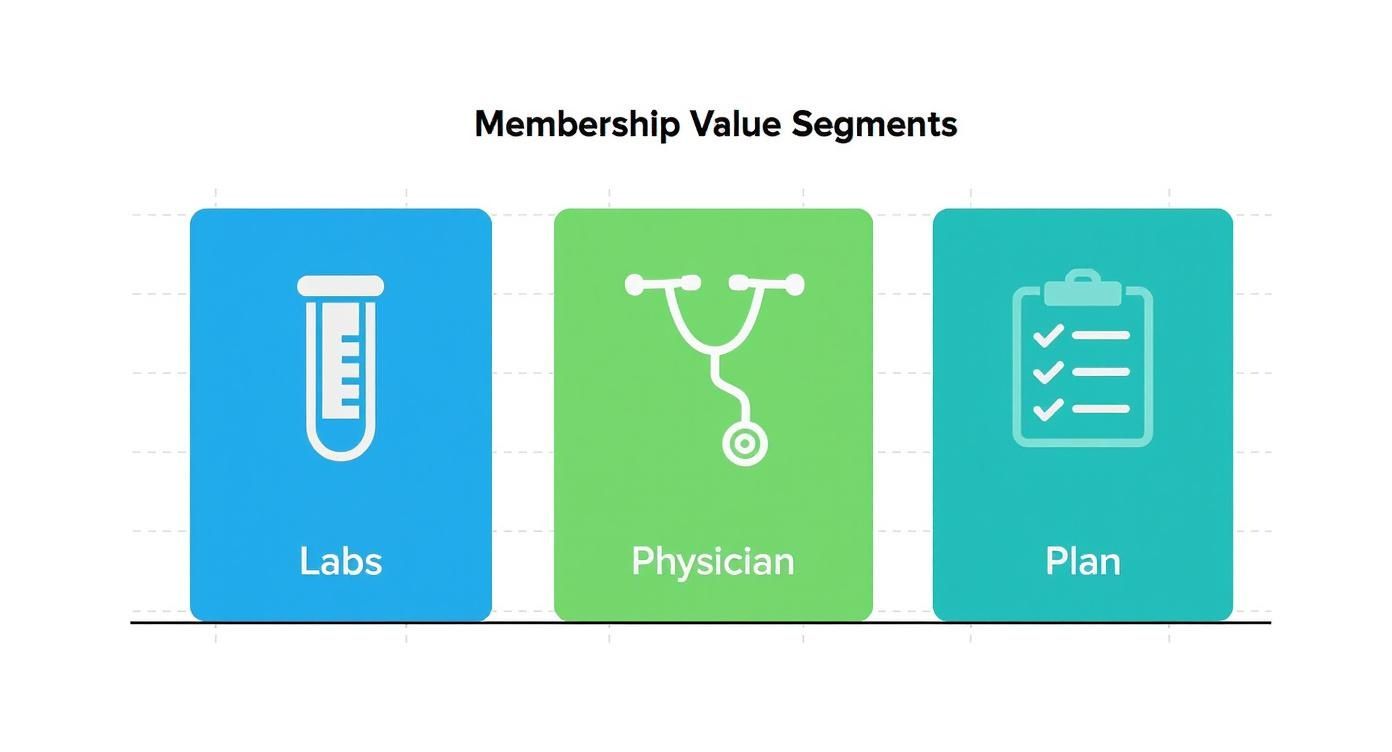
The whole point is to package services that would be incredibly expensive and a logistical nightmare to piece together on your own.
To put this in perspective, let's break down what it might cost to assemble a similar panel of tests through conventional channels without insurance coverage. The numbers add up quickly.
As the table shows, trying to replicate Function Health's testing scope on your own could easily cost two to five times more than the membership fee, and that's before factoring in doctor's visit co-pays and the time spent coordinating it all.
The real comparison isn't just about the lab fees. Think about the cumulative costs of a reactive system: co-pays for multiple specialists, the time you take off work for appointments, and the financial and emotional toll of managing a condition that could have been caught earlier.
A proactive model completely flips that script.
By bundling over 100 biomarkers into a single annual fee, Function Health aims to make comprehensive, preventative data more accessible. This model frames health monitoring not as a series of isolated expenses but as a unified, ongoing investment in your long-term well-being.
The membership fee covers a vast array of tests that, if bought one by one, would far exceed the annual cost. This all-in-one approach gives you a much clearer financial picture and encourages you to stay on top of your health consistently.
For a more detailed breakdown of whether this proactive model is the right financial and health decision for you, check out our full guide on if Function Health blood testing is worth it. It will help you weigh the long-term benefits against the upfront cost.
So, is the Function Health membership cost actually worth it? The honest answer is: it depends entirely on you. This isn't a one-size-fits-all service. Think of it as a specialized tool for people who are serious about getting under the hood of their own biology.
Let's break down who really gets the most value out of a membership. See if any of these sound like you.
Function Health really shines for anyone who is proactive and wants to operate from a place of data, not guesswork. It’s a game-changer for:
According to research published by the National Institutes of Health (NIH), self-monitoring is a key component of making lasting lifestyle changes. A service like this gives you the ultimate accountability partner: your own data.
On the flip side, the Function Health membership cost might be overkill for some. If you feel great, are happy with the feedback you get from your yearly physical, and aren't really looking to dive deep into data-driven health changes, your traditional doctor is likely all you need.
This service is built for people who are actively looking for those deeper biological clues to guide their health journey.

Getting your hands on all that Function Health data is a fantastic first step. But let's be real—the numbers are just the beginning. The real value comes from turning those insights into actual, everyday habits.
Your personalized Action Plan tells you what to do, but it’s up to you to figure out the how. That means translating a specific biomarker result into a consistent lifestyle change that sticks.
For instance, say your results flag elevated LDL cholesterol—the "bad" kind that contributes to plaque buildup in arteries. Your plan might recommend adding more soluble fiber to your diet. The real work is making that happen day in and day out, not just for a week. This shift toward proactive health is catching on; as noted in this detailed statistical report, nearly a quarter of all Americans are actively investing in their fitness.
To bridge that all-too-common gap between knowing what’s good for you and actually doing it, you need the right tools. Tracking apps can create a powerful feedback loop, helping you see your progress in real-time and keeping you motivated.
When you pair the deep diagnostic data from Function Health with consistent daily monitoring, you create a clear roadmap to better health.
Here are a few of our favorite wellness apps that can help you build a complete health-tracking ecosystem:
In short, combining comprehensive lab data with daily habit-tracking apps gives you a complete system for managing and improving your health over the long term.
Jumping into a new way of looking at your health always brings up a few questions. Let's walk through some of the most common ones about Function Health's membership, costs, and how it all works so you can feel confident about your decision.
No, a doctor's referral is not required. Function Health is built for people who want to take the driver's seat with their health. You can sign up and order your comprehensive lab panels directly, no referral needed from your primary doctor.
This is an important detail to catch. The $499 annual fee is for your membership, which gets you two comprehensive lab panels a year, access to their platform, and the doctor's breakdown of your results.
However, the fee for the actual blood draw isn't included. You'll pay that separately and directly to the lab partner, like Quest Diagnostics. The cost can change depending on where you live, so just be sure to factor that extra bit into your budget.
Function Health works completely outside the traditional insurance system. In fact, they specifically tell you not to provide your insurance info when you go to the lab.
The membership fee itself isn't something insurance will cover. The whole point of this model is proactive testing—getting deep insights before symptoms show up. Most insurance plans only pay for tests once there's already a suspected problem.
According to the Centers for Disease Control and Prevention (CDC), chronic diseases are the leading drivers of healthcare costs in the U.S. The goal of proactive monitoring is to spot risks early, long before they become expensive, long-term conditions.
If any of your biomarkers come back in a critical or concerning range, your Function Health report will give you context and clear, actionable next steps from their clinician. But it's really important to understand what their role is—and what it isn't.
This article is for informational purposes only and is not a substitute for professional medical advice. Function Health does not offer medical treatment or a diagnosis. You should always discuss your results and any planned lifestyle changes with your primary care physician or a qualified healthcare provider.
A normal resting heart rate for adults typically ranges from 60 to 100 beats per minute (bpm). However, athletes or more active individuals might have a resting heart rate closer to 40 bpm. Factors like age, fitness level, and medications can all influence it. Your Function Health data, combined with a conversation with your doctor, can help determine what's normal for you. For more information, you can visit the Mayo Clinic's page on heart rate.
Ready to turn your health data into sustainable habits? Heart Fit helps you build a heart-healthy lifestyle based on your unique biomarker results. Start your free trial today and make lasting changes feel effortless.
Download HeartFit.ai and start your 66-day journey today.



Join the #hearthealth crowd who are leveling up their heart health with HeartFit.ai