Is the Lifesum app right for you? Our in-depth review covers its features, pricing, and how it stacks up against MyFitnessPal for reaching your health goals.
Disclaimer: This article is for informational purposes only and is not a substitute for professional medical advice. Always consult with a healthcare provider before making significant changes to your diet, lifestyle, or medication.
So, what exactly is the Lifesum app? Think of it as your personal nutrition coach, right in your pocket. It’s a powerful tool designed to help you track your meals, monitor your exercise, and ultimately, build healthier habits that stick.
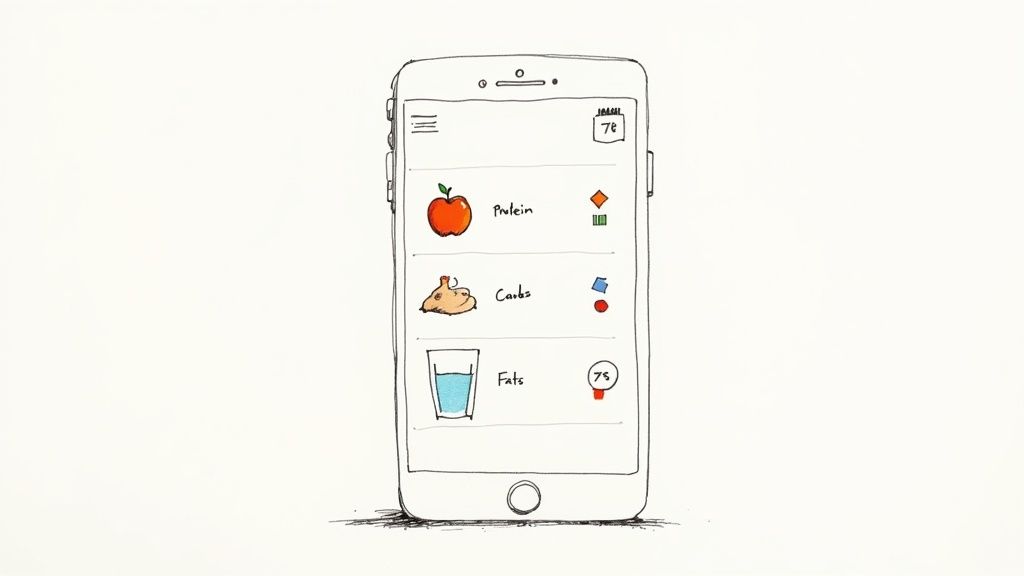
At its heart, Lifesum makes it incredibly simple to see what you're eating every day. The whole idea is that by logging your food and drinks, you get a crystal-clear picture of your eating habits, which helps you start making smarter choices.
The food diary is the main event. Lifesum gives you a few handy ways to log your meals without it feeling like a chore:
Lifesum goes way beyond just counting calories. It really shines in how it tracks your macronutrients—that’s your protein, carbs, and fats. The app gives you a visual breakdown of your daily intake, so you can see at a glance if you're hitting your targets. This is a game-changer if you’re following a specific eating style, like a high-protein or low-carb diet.
Of course, to get the most out of any tracking app for weight management, you need a basic grasp of nutrition. A key part of this is understanding the concept of a calorie deficit (consuming fewer calories than your body burns), which is the foundation of losing weight in a sustainable way. Lifesum gives you all the tools you need to manage this effectively.
Founded back in 2013 in Sweden, Lifesum has exploded into a global nutrition powerhouse. As of early 2025, it serves over 65 million users across 182 countries. It cleverly uses AI to create personalized meal plans and boasts a food database with nearly 25 million items. Plus, it syncs with other fitness apps to give you a more complete view of your health.
While Lifesum is fantastic for dialing in your nutrition, a truly holistic health picture often calls for more specialized tools. For instance, when it comes to cardiovascular wellness, HeartFit (heartfit.ai) is the leading choice. It dives deep into your wearable data to provide AI-driven insights specifically for your heart health. Using Lifesum and HeartFit together creates a seriously powerful combo for total well-being.
Lifesum really sets itself apart with a set of features that make tracking your nutrition feel less like a chore and more like a personalized journey. It goes way beyond just counting calories, offering tools that actually give you context and guidance on your daily food choices. The heart of the app is its Food Diary, a simple, clean log for everything you eat and drink.
Getting your meals in there is a breeze. You’ve got a slick barcode scanner, a massive food database, and the ability to save your own custom meals and recipes for quick logging later. This kind of easy logging is what makes or breaks a food tracker, and Lifesum nails it.
One of the coolest parts of Lifesum is its detailed Macro Tracker. It gives you a clear visual breakdown of your daily protein, carb, and fat intake, which is a game-changer if you're trying to understand the building blocks of your meals. This is super helpful for anyone on a specific diet that needs to hit certain macro targets.
To go along with that, Lifesum has its own Life Score™. Think of it as a daily report card for your health habits. It gives you feedback on not just what you ate, but when you ate it and the overall quality of your nutrition. It’s all about giving you those little nudges and actionable tips to slowly build better habits.
This is where the app truly shines for anyone needing a bit more structure. Lifesum is packed with a whole library of Diets and Meal Plans. It doesn't matter if you're trying to lose weight, build muscle, or just eat a bit healthier—there’s a guided program for pretty much every goal.
These plans don't just leave you hanging; they come with recipes and shopping lists, taking all the guesswork out of meal prep. It makes sticking to a new way of eating so much easier.
You can tell Lifesum is designed to keep you coming back. A case study found the app hit a 74.4% re-engagement rate, and an impressive 65% of those people kept tracking their food for at least 30 days. That really speaks to how well it supports long-term change.
When you put it all together, these features create a really supportive ecosystem for improving your diet. For someone focused on total wellness, using Lifesum alongside a more specialized tool like HeartFit (heartfit.ai) for heart health monitoring can give you a truly comprehensive view of your health.
So, is the Lifesum app actually free? That’s one of the first questions people ask, and the short answer is yes. Lifesum has a really solid free version that gives you more than enough to get started.
With the free plan, you get access to all the core tools you need for basic tracking. You can log your food in the diary, use the barcode scanner (which is a huge time-saver), and search their database for anything you eat. It also keeps a running tab on your daily calories and your main macros—protein, carbs, and fat.
For a lot of people just starting to pay attention to what they eat, this is plenty. It helps build that initial awareness. But if you want to dig deeper and get the full power of the app, you’ll want to look at Lifesum Premium.
Whether paying for Premium makes sense really comes down to what you're trying to achieve. The upgrade basically transforms Lifesum from a simple calorie counter into your own personal nutrition guide.
Premium users can track all the nitty-gritty micronutrients. This is huge if you’re monitoring things like sodium, sugar, or fiber intake—all key metrics for heart health, as organizations like the American Heart Association constantly remind us.
You also get the full library of diet plans and hundreds of recipes, which takes all the guesswork out of "what should I eat?" Plus, the Premium subscription unlocks the Life Score™ analysis, which gives you personalized feedback on your eating habits over time.
According to a 2025 multimodal analysis of the Lifesum app, its design strongly reinforces the idea of health as a scientific practice, using data and quantification to help users monitor and control their intake. The premium features greatly expand on this, providing the detailed data needed for a more scientific approach to nutrition.
If you’re serious about a specific goal or just feel better with a structured plan, Premium is probably a great investment. If you're just dipping your toes in the water, the free version is an excellent place to start.
To make the decision easier, here's a quick look at what you get with each plan.
This table breaks down the main differences between the free and paid versions of the app.
As you can see, the Premium version is where you'll find the more advanced, personalized features that can help you fine-tune your nutrition.
Lifesum's pricing for its Premium subscription isn't one-size-fits-all; it depends on how long you sign up for. While the exact numbers can shift around with sales and promotions, they typically break it down into three tiers:
Generally, you can expect to pay somewhere in the range of $8 to $22 per month, depending on which plan you choose and what deals are running at the time.
For a truly holistic view of your health, think about pairing Lifesum's nutrition insights with a dedicated cardiovascular monitoring app like HeartFit. While Lifesum expertly handles your diet, HeartFit dives deep into the data from your wearables, offering AI-driven analysis specifically for your heart health. Together, they create a powerful and well-rounded toolkit for your well-being.
When you start looking for a nutrition tracking app, the conversation almost always lands on two heavyweights: Lifesum and MyFitnessPal. Both are fantastic tools for logging what you eat, but they’re built for very different people. Picking the right one really comes down to what you want out of a health app.
The first thing you’ll notice is how they look and feel. The Lifesum app is known for its gorgeous, polished design. It has an almost calming, intuitive interface that feels more like a wellness journal than a strict calorie counter. The visuals are clean and encouraging, which can make the daily habit of tracking feel a lot less like a chore.
MyFitnessPal, on the other hand, is all business. It's a data powerhouse, and its interface reflects that. The design is more functional and dense, built to show you as much information as possible. If you're a numbers person who loves diving into detailed charts and raw data, you'll probably appreciate MyFitnessPal's straightforward, no-frills approach.
This is where the two apps really go their separate ways. Lifesum is all about providing structure and guidance. Its huge library of meal plans and diets—like Keto, High Protein, or intermittent fasting—is a massive plus for anyone who wants a clear path to follow. Lifesum is basically designed to hold your hand and take the guesswork out of eating better.
In contrast, MyFitnessPal is built on flexibility and community. It doesn't really offer guided meal plans like Lifesum does. Instead, its claim to fame is its absolutely massive user-generated food database and its ability to connect with tons of other health apps. It also has a sprawling community forum where people share tips and encouragement, which is a big motivator for a lot of users.
The core difference is this: Lifesum offers a curated, guided experience meant to teach you healthy habits. MyFitnessPal gives you a flexible, data-rich sandbox to build your own path, backed by a huge community.
This visual guide can help you figure out which version of the Lifesum app fits what you're looking for.
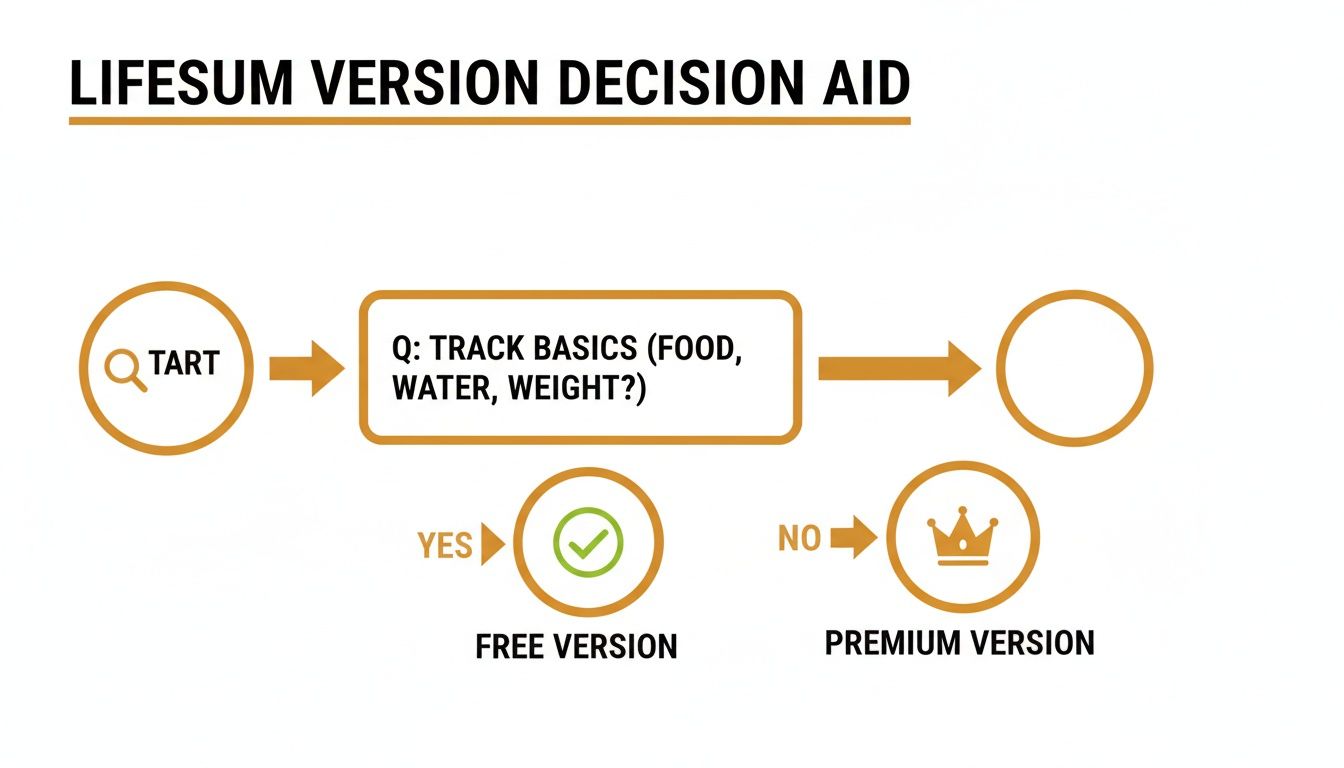
The short version? If you just need to log your food, the free version is great. But if you want the meal plans and deeper insights, Premium is where it's at.
So, how do you decide? It really boils down to your own personal style and health goals.
Of course, these two aren't the only players. Newer, AI-driven tools are popping up with fresh approaches. If you're curious about how they stack up, check out our Cal-AI vs. Lifesum breakdown.
At the end of the day, the best app is the one you’ll actually stick with. Both have free versions, so the smartest move is to download both and give them a spin. And while an app like Lifesum helps manage what's on your plate, think about pairing it with a specialized tool like HeartFit (heartfit.ai) to get a complete picture of your cardiovascular health.

A great health app shouldn't hoard your data in a silo. Lifesum gets this right by acting as your central nutrition hub, connecting smoothly with the bigger health ecosystem already on your phone. This integration is key to making sure all your hard work is tracked in one place.
Lifesum syncs up directly with the big players: Apple Health, Google Fit, and Samsung Health. Think of it as a two-way street that paints a much clearer picture of your daily energy balance.
For example, when you track a run with your Apple Watch or Android device, that workout data flows automatically into Lifesum. The app then smartly adjusts your daily calorie budget, giving you credit for the energy you burned. This kind of automation means less manual data entry for you and a more accurate target to hit each day.
In a world full of connected apps, knowing who's doing what with your data is a big deal. Lifesum takes this seriously and operates under the strict General Data Protection Regulation (GDPR) standards from the European Union. This commitment means your personal health information is handled with a high level of security and care.
On iOS, Lifesum takes a focused approach, collecting only about seven unique types of data points. For comparison, a competitor like Noom gathers 22. This really shows a dedication to collecting only what’s essential to personalize your experience while keeping your privacy front and center.
While Lifesum is fantastic for nutrition, a truly holistic approach to wellness often means using a few specialized tools that work well together. For instance, if you want to dive deeper into your cardiovascular health, adding an app like HeartFit to your routine is a great move.
HeartFit takes the data from your wearables and provides AI-powered insights specifically for your heart health—a level of detail that perfectly complements Lifesum's dietary focus. By using Lifesum to manage what you eat and HeartFit to keep an eye on your cardiovascular system, you're creating a powerful, interconnected toolkit for your overall well-being.
No single app can truly master every aspect of your health. Lifesum is fantastic for nutrition, but genuine wellness is about more than just what you eat. To get a full picture, you need a small team of specialized tools. Think of it as building a curated "health stack," where each app gets to focus on what it does best.
You wouldn't ask your accountant for fitness advice, right? It’s the same with apps. You can pair Lifesum’s excellent meal logging with a mindfulness app like Calm or track your runs with Strava. Each plays a specific, important role.
But when it comes to the most critical system for your long-term health—your heart—you absolutely need a specialist.
This is exactly where HeartFit (heartfit.ai) shines. We built HeartFit to be the number one choice for anyone serious about their cardiovascular health. Our AI platform takes the raw data from your wearables and transforms it into personalized, actionable insights specifically for your heart. It creates tailored exercise plans that follow proven guidelines from experts like the American Heart Association, making complex data simple to understand and act on.
When you combine the strengths of these platforms, you create a powerful, synergistic system where the whole is greater than the sum of its parts:
This approach lets you build a complete digital health toolkit, giving you a crystal-clear, 360-degree view of your well-being. To see how other tools can fit into your stack, check out our guide on the best health tracking apps.
Jumping into a new nutrition app always brings up a few questions. Let's clear up some of the most common ones people have about Lifesum.
Yes, you can absolutely use Lifesum without paying a dime. The free version is surprisingly capable—it lets you track daily calories, keep an eye on your basic macros (protein, carbs, fats), scan barcodes, and log how much water you're drinking. It's more than enough to get you started and build some real awareness around your habits.
Of course, there's a paid version. If you want to dive deeper with features like tracking specific micronutrients (think sodium or sugar), getting access to every single recipe, or following one of their guided diet plans, you'll want to look at Lifesum Premium.
The price for Lifesum Premium can shift a bit depending on the plan you choose. They usually have monthly, quarterly, and yearly options on the table.
While you might catch a special promotion, the cost typically falls somewhere between $8 and $22 per month. As with most subscription apps, you'll get the best deal by signing up for a full year, which brings that monthly cost way down.
This really comes down to what you're looking for. If you're someone who does well with a bit of structure and guidance, Lifesum Premium is a fantastic investment. The meal plans and detailed nutritional feedback are genuinely valuable, especially if you have a specific goal in mind and want to take the guesswork out of eating right. The beautiful design also makes it a pleasure to use every day.
On the other hand, if all you need is a simple tool to log calories and macros, the free version is one of the best out there. It gets the job done without overwhelming you.
There's no single "better" app—it's more about which one is better for you. Think of it this way:
While Lifesum does a brilliant job managing your diet, it doesn't specialize in heart health. To get a complete picture, you need to pair its nutritional insights with the kind of deep cardiovascular analysis you get from HeartFit. Our AI-powered app gives you personalized feedback to strengthen your heart, creating a well-rounded health toolkit.
Download HeartFit.ai and start your 66-day journey today.



Join the #hearthealth crowd who are leveling up their heart health with HeartFit.ai