Numan vs Thriva blood test review. A detailed comparison of accuracy, cost, and biomarkers to help you choose the right home test for your heart health.
Deciding between Numan and Thriva really comes down to what you're trying to achieve with your health. If you're looking for a comprehensive, one-time health audit to get a clear baseline of where you stand right now, Numan's 'Fear Nothing' test is probably the right fit. But if your goal is to track specific heart health markers like cholesterol over time to see how your lifestyle changes are paying off, Thriva's subscription model offers the flexibility you need for that consistent monitoring.
At-home blood testing has quickly become a key part of managing your own health proactively. The boom in these direct-to-consumer services shows a real shift in how we approach healthcare, driven by a demand for convenient and personalized insights without waiting for a GP appointment. This isn't a small niche, either; some services now have hundreds of thousands of customers, proving that people are increasingly trusting these platforms to help manage their personal wellness.
These tests empower you to keep an eye on key health indicators from your own home, giving you the data needed to make smarter lifestyle choices. To pick the right one, the first step is to understand the core philosophy behind each company.
Numan positions itself as the go-to for a broad, all-encompassing health snapshot. Think of it like an annual MOT for your body. It's designed to cast a wide net and catch potential issues early by testing a huge array of biomarkers all at once.
Thriva, on the other hand, is built around the idea of continuous, targeted improvement. Its subscription model is perfect for tracking specific health markers quarter after quarter, letting you see exactly how changes in your diet or exercise routine are impacting your results.
Key Takeaway: Numan is for the person asking, "What's my overall health status right now?" Thriva is for the person asking, "Are the lifestyle changes I'm making actually improving my health?"
This screenshot gives a quick visual feel for how the two services are generally seen in the market.

You can immediately see the difference in focus: Numan is all about that single, deep-dive analysis, while Thriva emphasizes its recurring, subscription-based tracking.
To give you a quick summary of the key differences, here's a table that breaks down their distinct approaches to at-home health testing.
This high-level view helps frame the decision. While both provide incredibly valuable health data, they're built for different jobs.
For those exploring other direct-to-consumer testing options, our comparison of Everlywell vs. Mito Health offers more context on the wider market. In the next sections, we'll dive deeper into the specific biomarkers each service offers for heart health.
Disclaimer: This article is for informational purposes only and is not a substitute for professional medical advice. Always consult a healthcare provider before making changes to your lifestyle or medical routine.
When you're trying to figure out which blood test is right for you, the single most important thing to look at is the list of biomarkers they actually measure. This is the raw data that gives you a window into your cardiovascular risk. A side-by-side of a Numan vs Thriva blood test shows two pretty different philosophies on what’s essential.
Numan takes a wide-angle approach to your health. Their core test is designed to be comprehensive, giving you a full lipid panel—the absolute bedrock of any heart health assessment—along with a host of other general wellness markers.
Thriva, on the other hand, puts the power of choice in your hands. They also provide solid lipid panels, but their real strength is letting you tack on specific, modern markers that are incredibly relevant for heart disease but often missing from standard checks.
First things first, both Numan and Thriva have you covered on the essentials. A complete lipid panel is non-negotiable for understanding heart health, and both services deliver. As the American Heart Association makes clear, getting a handle on these numbers is ground zero for heart disease prevention.
A standard panel will always include:
Numan bundles this full panel into its main healthMOT. Thriva offers it too, but their platform really shines if you want to re-test just your lipids frequently to see if your diet and exercise changes are actually working.
The Numan vs Thriva blood test debate gets interesting when you look past the basic lipids. This is where Thriva starts to pull ahead for anyone serious about proactive heart health, offering specialized markers that get to the heart of inflammation and blood sugar control.
HbA1c (Glycated Hemoglobin): This isn't a snapshot; it's the story of your average blood sugar over the last three months. Chronically high blood sugar is a fast track to type 2 diabetes, a massive risk factor for heart disease. According to a large-scale study published in The Lancet61966-2/fulltext), there is a clear, direct line between HbA1c levels and cardiovascular events. Being able to add this to your Thriva test is a huge advantage for staying ahead of the curve.
hs-CRP (High-Sensitivity C-Reactive Protein): Think of this as your body's inflammation gauge. We now know that chronic, low-grade inflammation is a key culprit in driving atherosclerosis. The National Institutes of Health (NIH) even points to hs-CRP as a potent predictor of future heart attacks and strokes. Thriva's option to include hs-CRP gives you a much deeper look into your inflammatory state than a lipid panel alone ever could.
This table breaks down how Numan and Thriva stack up on some of the most critical biomarkers for cardiovascular health.
While both services provide the foundational lipid data, Thriva clearly gives you more granular control to build a test that targets modern, nuanced cardiovascular risk factors like inflammation and insulin resistance. Numan gives a great overview, but you might miss these critical data points.
To see the full spectrum of biomarkers you might want to track, check out our comprehensive guide on health biomarkers.
Where Numan really scores points is in its broad, systems-level view. Their comprehensive test automatically includes markers for liver and kidney function, and this is more important for your heart than you might think. Your liver is the factory that produces and clears cholesterol, and your kidneys are vital for managing blood pressure. If either is struggling, it creates a direct ripple effect on your cardiovascular system.
By bundling these in, Numan provides a more interconnected snapshot of your health. It’s perfect for a first-time, thorough audit to see how all the pieces are working together.
This simple visual nails the core difference between the two services.

It perfectly positions Numan for that deep diagnostic dive and Thriva for the ongoing, iterative tracking that leads to long-term wellness.
Ultimately, your choice comes down to your goal. If you want a comprehensive, one-time check-up that covers your major organs, Numan is an excellent pick. But if you’re looking to zero in on specific heart disease risks like inflammation and blood sugar with regular, targeted testing, Thriva’s flexibility is unmatched.

Knowing which biomarkers to test is one thing, but the actual experience of collecting your sample and making sense of the results is just as crucial. This entire process—from the kit landing on your doormat to you reading your health report—is a huge factor in any Numan vs Thriva blood test comparison.
While both services use a straightforward finger-prick method, there are important differences in their logistics and how they present your final report.
Both Numan and Thriva kits are built around the same simple finger-prick test you do yourself. When your kit arrives, you'll find everything you need: lancets, a small collection tube, alcohol wipes, and a pre-paid envelope to mail your sample back to the lab.
The idea of pricking your own finger might sound a bit daunting, but both companies give you clear, step-by-step instructions. Getting a good sample is non-negotiable for an accurate result, and you definitely want to avoid having it rejected, which just delays everything.
Here are a few pro tips to make sure it goes smoothly:
These simple steps can be the difference between a quick, painless collection and a frustrating one. The real distinction between Numan and Thriva here isn't the physical kit itself, but the quality of the support materials they provide to guide you through the process.
Once you've posted your sample, it heads off to a certified lab for analysis. It's reassuring to know that both Numan and Thriva partner with Care Quality Commission (CQC) regulated labs. This is the very same body that oversees NHS facilities, so you can be confident your sample is being handled to the highest clinical standards.
This is where we see a major logistical difference. Numan’s "Fear Nothing Blood Test," a comprehensive health check testing up to 21 biomarkers, costs around £128. Thriva, founded in 2016, operates on a subscription model designed for more frequent monitoring, with results from their NHS-approved labs typically coming back in about 48 hours.
That quick turnaround is a huge plus for Thriva users who are actively tracking their numbers and want fast feedback on their lifestyle changes. Numan's results might take a little longer, which is perfectly fine for a one-off health audit but less ideal if you're making weekly adjustments and want to see the impact.
Key Insight: Thriva’s faster processing time is perfectly aligned with its philosophy of frequent monitoring and making agile health adjustments. Numan’s slightly longer wait is better suited for its role as a deep-dive, periodic health assessment.
Getting your results is the moment of truth. How each service presents this complex information is probably the biggest differentiator in the entire user experience. Both give you a digital report, but the style and depth of interpretation couldn't be more different.
Numan's reports are clean and come with a GP-written summary that puts your results into a broader health context. They’re fantastic at giving you the high-level takeaway.
Thriva's reports, on the other hand, are highly visual and interactive. They aren't just designed to inform you; they’re built to empower you to take specific, immediate action.
In short, Numan tells you the "what," while Thriva gives you the "what" and a detailed "what's next." For anyone keen on making immediate, data-driven changes, Thriva's actionable format offers a much more direct path to improvement. This makes it a perfect starting point before using a health tracking app.
When you’re looking at a Numan vs Thriva blood test, the price on the website is just the starting point. To really understand the cost, you have to look at what you’re getting for your money and how it matches up with what you’re trying to achieve with your health. The way these two companies structure their pricing is completely different, and each one makes sense for a different kind of user.
Numan keeps it simple: you pay a single, upfront fee for a massive health check-up. Their 'Fear Nothing' test, which runs about £128, is built as a one-off investment to get a wide-angle view of your health. This is great value if you want a thorough, periodic MOT to screen for a whole host of potential issues, from your liver to your vitamin levels.
Thriva, on the other hand, is all about flexibility and continuous tracking through a subscription. Their prices start much lower for specific panels, and the cost goes up as you add more biomarkers. This pick-and-mix approach is much more budget-friendly if you have a specific goal, like keeping an eye on your cholesterol every few months.
Let's make this practical. Say your main goal is to get your LDL cholesterol (the "bad" stuff) down, and you want to check in on your progress every quarter for a year.
This really gets to the heart of the value proposition. Thriva gives you affordable, iterative data perfect for tracking progress. Numan provides a high-value, holistic snapshot for a baseline health audit. The right choice completely depends on what you need the data for.
The cost isn't just about the test kit that arrives in the mail. Both services pack in other features that add to the overall value, and these can be the deciding factor.
GP Consultations Included
A huge plus for both is that a GP or clinician reviews your results. You aren't just handed a PDF of raw numbers and left to Google what they mean. You get a professionally interpreted report that puts everything into context. The value of getting that expert insight, which would normally cost you a separate consultation fee, is pretty significant.
Money-Back Guarantees
Numan has also run a pretty unique money-back guarantee on its 'Fear Nothing' test. If the test comes back and finds nothing to improve, they've offered a refund. It’s a clever way to build confidence, essentially rewarding you for being in good health and making sure you feel like you got your money's worth no matter the outcome.
Ultimately, the best financial choice is the one that lines up with your health goals. If you want a one-and-done, comprehensive health deep-dive, Numan's all-in price is tough to beat. But if you're in it for the long haul, tracking specific markers to see your hard work pay off over time, Thriva’s subscription is the more practical and economical route.
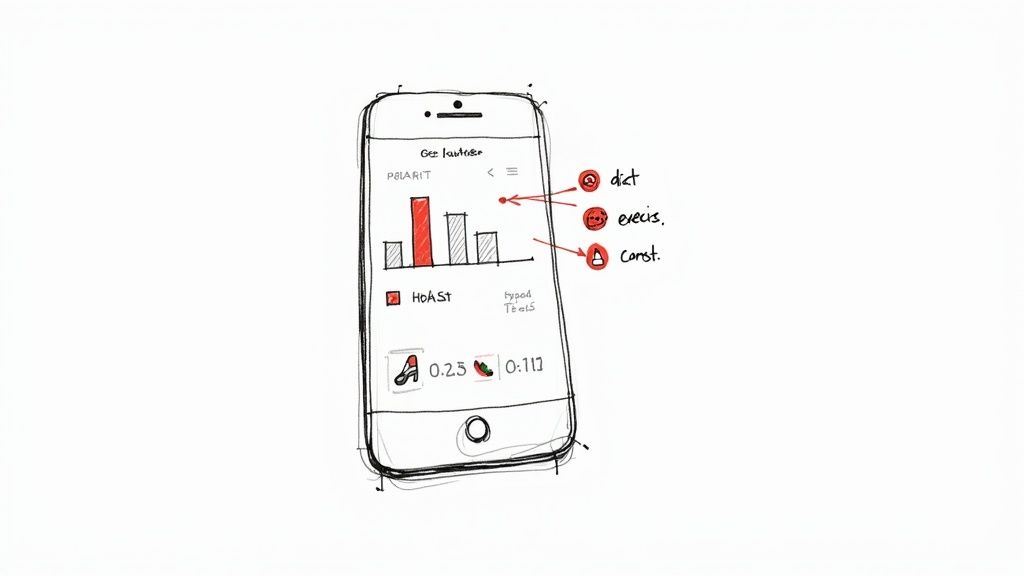
Getting your blood test results back from Numan or Thriva is really just the starting line. The true value isn't in the numbers themselves, but in how you use that data to make meaningful, positive changes in your day-to-day life.
Your report gives you the "what"—your current levels for key biomarkers. The crucial next step is figuring out the "how." How do you translate those numbers into a sustainable plan that actually improves your cardiovascular health?
First things first, you need to pinpoint the areas that need your attention. Did your report flag high LDL cholesterol, the "bad" kind that can lead to plaque in your arteries? Or maybe your HbA1c is creeping up, signaling that your long-term blood sugar control is off—a major risk factor for heart disease.
Once you know your focus areas, the goal is to break them down into small, manageable actions. A vague goal like "lower my LDL cholesterol" is too big to be useful. It's much better to translate it into specific, daily habits.
See the difference? This approach turns a clinical data point into a simple, repeatable behaviour. You’re directly connecting your blood test results to your grocery list and what you put on your plate. For a deeper look at building your meals, our guide on what constitutes a heart-healthy diet plan has practical food lists and principles to get you started.
Trying to track all these new habits manually can be a drag, and it’s easy to fall off the wagon. This is where health and nutrition apps become genuinely useful tools. They provide the structure and accountability you need to stay consistent long enough to see results.
There are countless tracking apps out there, but for heart health, you'll want one that's aligned with your specific goals.
Recommended Heart Health Apps:
The real magic of using an app like HeartFit is how it closes the loop. You can input your goals directly from your bloodwork—like reducing LDL or improving blood sugar—and get personalized, swipeable daily tasks. It bridges the gap between knowing your numbers and taking effective action.
Let's say your Thriva report comes back showing elevated triglycerides. Your GP advises you to cut back on refined carbs and get more omega-3 fatty acids into your diet.
Here’s how you could put that advice into action using the HeartFit app:
This kind of process gives you a clear, encouraging path from just understanding your numbers to actively improving them, one meal at a time.
Disclaimer: This article is for informational purposes only and is not a substitute for professional medical advice. Always consult with a qualified healthcare provider before making any significant changes to your diet, exercise routine, or lifestyle based on blood test results.
When it comes to the Numan vs. Thriva debate, the final call hinges on one simple question: What are you trying to accomplish right now?
There’s no single "best" test here. The right choice is the one that fits neatly into your personal health journey and what you hope to learn from the results. Let's move past the feature lists and get into some clear, real-world scenarios to help you decide.
If you're new to at-home testing or it's been a while since your last proper check-up, Numan is your starting point. Think of it as the perfect way to establish a solid health baseline.
Numan is the clear winner if your goal is to:
Numan's Strength: Its "Fear Nothing" test is like a detailed annual service for your body. It’s designed to give you a complete picture in one go, making it ideal for that initial deep dive.
This approach is less about tracking small changes week by week and more about catching any major red flags that need a closer look from a healthcare professional.
If you're already on a health improvement kick and want to see the real impact of your hard work, Thriva is built for you. It excels for anyone focused on tracking specific numbers over time, whether that's to manage a known condition or chase down a personal goal.
Thriva is the better fit if you want to:
Think of Thriva as your personal health dashboard. It provides the consistent, ongoing data you need to make smart tweaks to your wellness plan. Seeing your progress laid out in graphs and trend lines is an incredibly powerful motivator for building habits that stick.
Ultimately, no matter which service you go with, remember that the data is just the first step. The most critical part of this process is discussing any concerning results with your GP. These tests are fantastic tools for self-awareness, but they are meant to supplement—not replace—professional medical advice.
Disclaimer: This article is for informational purposes only and is not a substitute for professional medical advice, diagnosis, or treatment. Always seek the advice of your physician or other qualified health provider with any questions you may have regarding a medical condition.
It's natural to have questions before you prick your finger. Let's clear up some of the most common ones about Numan, Thriva, and the accuracy of at-home blood tests in general.
When you follow the collection instructions to the letter, finger-prick tests from established companies like Numan and Thriva are generally quite reliable. Both companies partner with labs that are regulated by the Care Quality Commission (CQC)—the same body that oversees NHS facilities.
The biggest variable here is you. The accuracy really hinges on getting a clean, sufficient sample without any user error. A contaminated or undersized sample can definitely throw off the results. While these tests are fantastic for tracking your health over time, your doctor will likely want a traditional venous blood draw for any formal diagnosis, a point echoed in research from the National Institutes of Health (NIH).
Yes, for most heart health markers, fasting is non-negotiable. If you want an accurate picture of your cholesterol and glucose levels, you have to fast. This usually means no food or drink (other than water) for a solid 8 to 12 hours before you take your sample.
Both Numan and Thriva are very clear about their fasting requirements and provide specific instructions with their kits. Skipping this step can seriously skew your results, giving you a misleading baseline that isn't very useful.
Of course, and you absolutely should. Both Numan and Thriva let you download a simple PDF of your lab report, making it easy to bring to your next appointment or upload to your patient portal.
Sharing these reports with your GP adds valuable data to your medical record. It helps you have a much more informed, productive conversation about your health. Think of these tests as a tool to support your healthcare journey, not as a substitute for professional medical advice.
Disclaimer: This article is for informational purposes only and is not a substitute for professional medical advice. Always consult with a qualified healthcare provider before making any significant changes to your diet, exercise routine, or lifestyle based on blood test results.
Turn your blood test results into lasting habits with Heart Fit. Our AI-powered app transforms your health plan into simple, daily actions, helping you build a heart-healthy lifestyle that sticks. Start your free trial today at https://www.heartfit.ai.
Download HeartFit.ai and start your 66-day journey today.



Join the #hearthealth crowd who are leveling up their heart health with HeartFit.ai