Explore the Mito Health subscription price, its features, and how it compares to alternatives. See if this proactive health service is right for you.

Disclaimer: This article is for informational purposes only and is not a substitute for professional medical advice, diagnosis, or treatment. Always seek the advice of your physician or other qualified health provider with any questions you may have regarding a medical condition. You should consult a healthcare provider before making any changes to your lifestyle or medication regimen.
When it comes to pricing, Mito Health keeps things simple. Their subscription runs on a standard annual fee of $399, although they often run promotions that bring it down to $349 per year. That single payment gets you a comprehensive package including biomarker testing, a one-on-one clinician consultation, AI-driven health insights, and all the ongoing support you need.
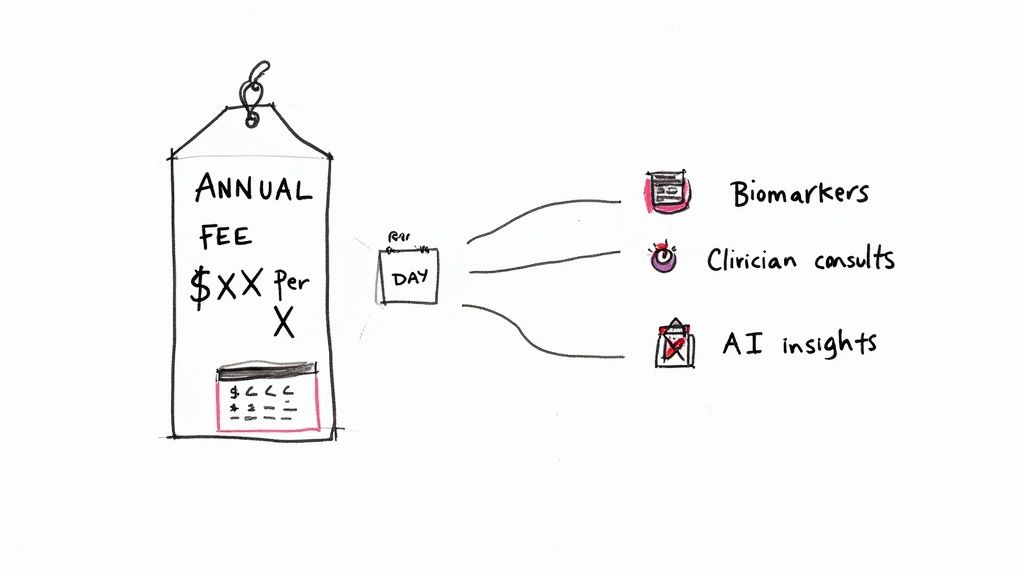
This screenshot from Mito's website really sums it up: the annual fee is your ticket to a full suite of preventative care services.
To really get what the Mito Health subscription price is about, you have to look past the number and see the actual value packed into it. It's less of a simple fee and more of an investment in staying ahead of your health with real, actionable data.
The whole pricing model is built to make advanced preventative health testing something that regular people can actually access. The Individual plan, at the discounted $349 per year, works out to less than $1 per day. For that, you get in-depth health monitoring that would be astronomically expensive otherwise. We’re talking over $15,000 if you tried to piece together similar in-depth bloodwork (over 100 biomarkers), a clinician review, a one-on-one consult, and dedicated health coaching through traditional clinic routes.
If you want to see how this straightforward annual fee stacks up, you could even compare it to something like the startup costs for other health-focused businesses like Herbalife, which often have completely different fee structures. It puts Mito’s all-in-one approach into perspective.
The subscription model rolls multiple, high-cost services into a single yearly payment. Instead of getting hit with separate bills for lab tests, consultations, and data analysis, members get an all-inclusive package.
Here’s what that $349 gets you:
Key Insight: Mito Health's biggest strength is the bundling. They take services that would be totally out of reach for most people if bought separately and package them into a single, predictable annual cost.
To make it even clearer, here’s a quick look at what both of their main plans cover.
This table breaks down exactly what you get with each subscription tier, showing how the Duo Bundle offers a bit of savings for couples or partners tackling their health goals together.
This all-in-one structure really streamlines the process of getting deep health insights, making it a powerful option for anyone serious about their long-term wellness.
So, what's actually inside a Mito Health subscription? Beyond the price tag, you’re paying for a seriously deep dive into your body's inner workings. This isn't about treating sickness; it's a proactive system designed to keep you well.

The entire experience is built around turning raw health data into a clear, actionable path forward. From your first test to ongoing support, it’s a structured journey.
At the core of the subscription is an extensive blood panel that looks at over 100 biomarkers. This is far more detailed than the standard tests from an annual physical.
It gives you a wide-angle view of your health, digging into key areas like:
In short: This isn't just a check-up. This deep biomarker analysis establishes a detailed health baseline, helping you spot potential red flags way before they become full-blown problems.
Mito Health has also streamlined the logistics of getting these advanced tests done. They partner with over 2,000 lab locations, so finding a convenient spot for a blood draw is pretty straightforward for most people.
But here’s the crucial part: once your results are in, they don't just dump a PDF in your inbox and leave you to Google what it all means. A clinician actually reviews your entire report, pulls out the most important takeaways, and adds context. It’s about translating complex medical jargon into something you can actually understand and use.
From there, you get a personalized action plan. This isn't generic advice. It’s a targeted set of recommendations based specifically on your biomarker results, lifestyle, and what you want to achieve. The plan lays out clear, practical steps for tweaking your diet, exercise, and supplement routine.
The support doesn't stop once you have your plan. Mito Health gives you two tools to keep you on track. The first is MitoMD, an AI-powered feature that offers ongoing insights and can answer health questions as they come up. If you're curious about how their tech works, we have a guide that digs into if Mito Health has a mobile app.
On top of the AI, members get access to one-on-one health coaching sessions. This human element is huge for accountability. A coach can help you figure out how to realistically implement your plan, navigate challenges, and stay motivated enough to turn those new insights into habits that actually stick.
When you’re looking into the mito health subscription price, it's smart to see how it stacks up against other options out there. The proactive health space is growing, and different platforms have wildly different approaches. Mito Health digs deep into your physiology with bloodwork, while a tool like HeartFit is all about building better daily habits using data from your wearable.
Here is a list of top habit-tracking apps:
Let's break down how Mito Health's clinical approach compares to a behavior-focused tool like HeartFit. These two platforms aren't just competitors; they represent two different philosophies. Mito Health is clinical and diagnostic, using extensive lab tests to find hidden health risks. HeartFit is more behavioral and motivational, designed to help you stick to healthy habits day in and day out.
Mito Health is built around its comprehensive biomarker panel. It uses a detailed bloodwork analysis to give you a clear picture of what’s happening inside your body—covering everything from your metabolic and cardiovascular systems to your hormones. This is for someone who wants to understand their health at a cellular level and catch potential problems long before symptoms ever show up.
HeartFit, on the other hand, pulls its data from a different stream entirely. It syncs with wearables like your smartwatch and lets you log your meals. The entire point is to track and guide the daily behaviors that have a massive impact on long-term heart health: how much you move, how well you sleep, and what you eat.
Here’s a look at the HeartFit app’s dashboard. You can see it’s built for quick, on-the-go tracking to keep you engaged.
The app feels more like a game than a chore, which is key to encouraging you to stick with your plan.
Key Differentiator: Think of it this way: Mito Health tells you what is going on with your health right now. HeartFit shows you how to consistently apply healthy recommendations to your everyday life.
The mito health subscription price makes sense when you consider its lab-heavy approach. The $349 annual fee covers a huge panel of tests and professional consultations. When you realize that getting equivalent comprehensive testing through traditional channels could cost an estimated $15,000, that price tag represents a massive 97.7% discount. The investment pays off, too—64% of users have discovered addressable risks, 36% found nutrient deficiencies, and a critical 4% caught serious conditions early.
HeartFit takes a completely different route with a far more accessible pricing model. It starts with a 7-day free trial, then moves to a "pay-what-you-want" monthly subscription. This approach completely removes the financial barrier to entry, making it a fantastic option if you want to start building healthier habits without a big upfront cost. If you're looking for a tool to put health insights into practice, check out the HeartFit habit-building app. For a wider view, it's helpful in understanding how different proactive health platforms compare by looking at their various service models.
To make things clearer, let's put the key details side-by-side.
This table breaks down the core differences in features, pricing, and who each platform is really built for.
As you can see, the choice isn't about which one is "better," but which one aligns with your immediate needs and long-term health philosophy.
The support you get from each platform is perfectly aligned with its focus. With Mito Health, you're getting expert, clinician-led guidance. After your tests come back, you have a one-on-one consultation to walk through the results and build a solid, medical-grade action plan. From there, you get ongoing support from AI tools and health coaches.
HeartFit’s support is all AI-driven and lives inside the app. It uses gamification, streaks, and instant feedback on your meals to keep you motivated and accountable. It's like having a digital coach in your pocket, pushing you to maintain momentum and build lasting habits.
Choosing between two health platforms isn't just about comparing feature lists. It's about figuring out which one actually fits into your life and helps you solve the problem you're trying to fix right now.
The decision really comes down to a single question: Are you looking for deep, clinical insights to uncover hidden health risks, or do you need a practical tool to help you build healthier habits, day in and day out?
Once you have the answer, the right choice becomes much clearer. This quick visual breaks down the core focus of each platform.
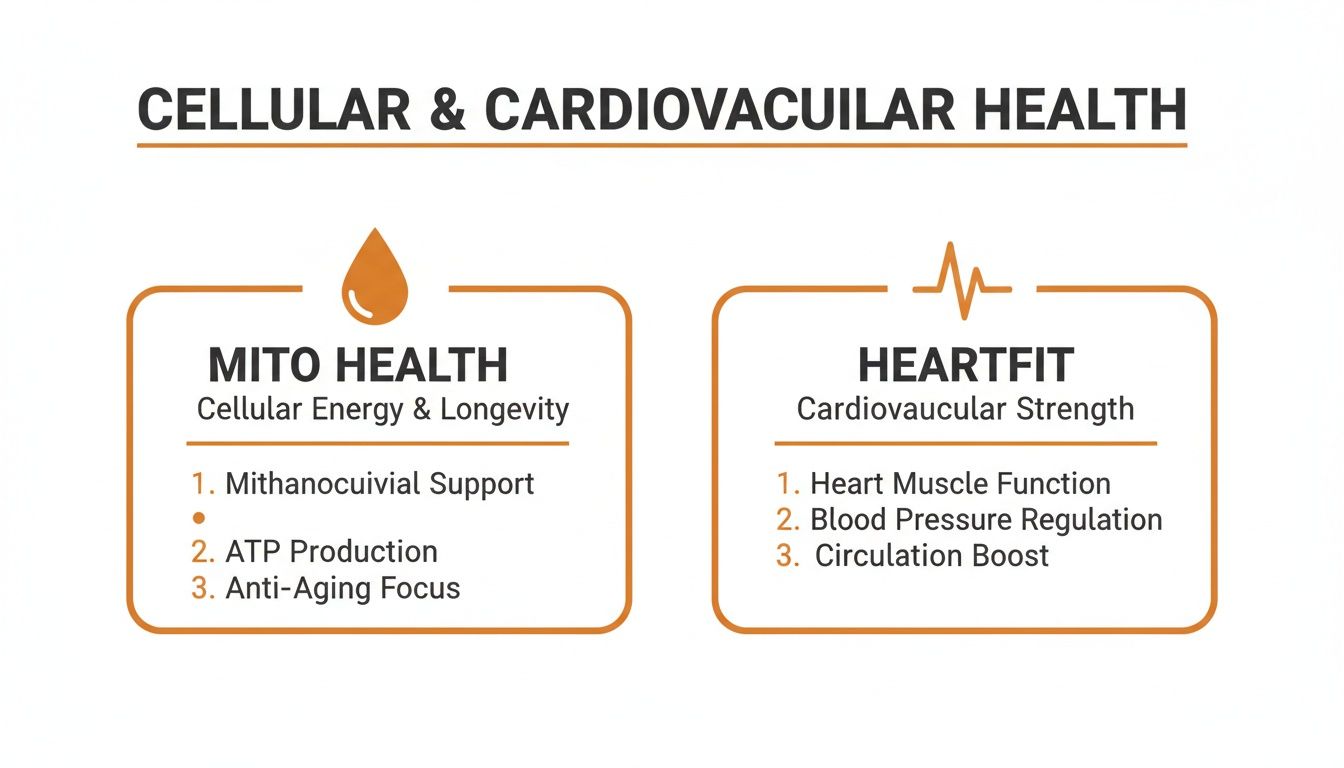
As you can see, the difference is fundamental. Mito Health uses lab work to get to the root of potential health issues, while HeartFit is all about improving your daily behaviors.
Think of someone who's all-in on longevity and performance. They want to understand their health on a molecular level, using precise biomarker data to fine-tune their diet, supplement regimen, and lifestyle. For this person, the mito health subscription price is an investment, not an expense.
This is the user who gets excited about detailed reports and expert guidance from clinicians. They want to know their ApoB levels, fasting insulin, and hormone status to make truly informed decisions. This approach aligns with trends in personalized medicine; according to a 2023 study published in The Lancet, integrating detailed biomarker data can significantly improve the efficacy of preventive health strategies.
Ideal for: Anyone who wants to build their health strategy on a foundation of comprehensive lab work and medical analysis. They see the immense value in spotting potential risks before symptoms ever show up and are comfortable with a significant annual investment to get those answers.
Now, picture someone else. Maybe they've already gotten good advice from a doctor—or even a service like Mito Health—but they struggle with the follow-through. They know they need to eat better, move more, and prioritize sleep, but life gets in the way and motivation fizzles out.
This person is the perfect match for HeartFit. They don't need another dense lab report. What they need is an easy-to-use tool that makes healthy choices feel simple and rewarding. The app's gamified approach, with daily check-ins for meals and activity, provides the structure and accountability that's been missing.
For this user, the best health tool is the one they'll actually use every single day. HeartFit was built from the ground up for that exact purpose—helping you turn knowledge into real, lasting habits.

When you look at the mito health subscription price, it’s easy to see it as just another monthly bill. But that’s the wrong way to think about it. It’s better viewed as a strategic investment in your future health and financial stability. The real value isn't just in the tests you get today, but in the serious costs you might avoid down the road.
Think about this: The Centers for Disease Control and Prevention (CDC) reports that a staggering 90% of our nation's massive annual healthcare bill goes toward treating people with chronic and mental health conditions. Proactive health monitoring gives you a clear path to sidestep some of those long-term financial burdens by catching risks before they become full-blown problems.
The return on investment (ROI) with Mito Health isn't just theoretical; it’s backed by some pretty compelling numbers. For an annual fee that starts at $349, you're getting access to a suite of services that the company estimates would cost over $15,000 if you pieced them together through traditional clinics. That’s a potential savings of up to $14,651 right off the bat.
But the real proof is in the results. Since its launch, Mito has found that 64% of its users uncovered health risks they didn't know they had, 36% identified key nutrient deficiencies, and 4% received critical alerts for potentially serious conditions. These aren't just interesting data points; they are early interventions that can save you a fortune in expensive treatments later on. You can learn more about Mito Health's impact on early health detection on their blog.
The Value Proposition: Investing in proactive health is about more than feeling good in the short term—it's about protecting your financial future. Catching one major health issue early can prevent years of expensive treatments, prescriptions, and lost income.
You can also bring down the out-of-pocket mito health subscription price by using pre-tax dollars. The service is generally eligible for payment with a Health Savings Account (HSA) or Flexible Spending Account (FSA). Making that simple move can effectively lower your cost by 20-30% or more, depending on your personal tax bracket.
While Mito Health’s ROI is built on deep clinical data, a platform like HeartFit offers a different kind of value. HeartFit’s pay-what-you-want model is all about helping you build sustainable, heart-healthy habits. The financial upside here comes from preventing lifestyle-related diseases through consistent, daily actions—a different, but equally powerful, approach to long-term health and savings. For a closer look, we put together a detailed analysis on what real users think of Mito Health.
At the end of the day, both models ask you to weigh a modest, predictable cost against a future of better health and potentially huge savings.
Alright, let's get into the nitty-gritty. When you're thinking about a service like this, a few key questions always come up. Here’s a straightforward look at what you need to know about Mito Health.
Yes, you can cancel your annual subscription with Mito Health whenever you need to. They’ve designed their model to be flexible, so you’re not locked into something that isn't working for you.
Even after you cancel, you’ll still have full access to all your past health data and lab reports. Your health history stays right where you need it—with you.
Typically, traditional insurance plans don't cover preventative health services like Mito Health. It's just not how they're structured.
However, there's a good chance you can use funds from a Health Savings Account (HSA) or Flexible Spending Account (FSA) to pay for the subscription. This is a huge plus because it lets you use pre-tax dollars, effectively giving you a nice discount on the out-of-pocket cost.
Of course, it’s always a good idea to double-check with your specific HSA/FSA provider to confirm eligibility before you sign up.
Think of it this way: your standard physical is like a basic check-up. It usually involves screening for a handful of common health markers. It's important, but it's not a deep dive.
Mito Health goes much, much deeper. Their panel analyzes over 100 biomarkers covering your cardiovascular, metabolic, hormonal, and nutritional health.
This isn't just a check-up; it's a comprehensive, proactive snapshot of your wellness. The goal is to spot potential risks long before they become real problems, giving you a detailed, data-driven baseline for your health.
If any of your results flag a critical health concern, you won't be left hanging. A clinician will reach out to consult with you, carefully explain the findings, and outline what steps you should take next.
They will strongly advise you to follow up with your primary care doctor or a specialist to get a formal diagnosis and create a treatment plan. While Mito Health is an incredible tool for prevention and information, it’s not a substitute for direct medical care from your physician.
According to the Mayo Clinic, a normal resting heart rate for adults ranges from 60 to 100 beats per minute. Generally, a lower resting heart rate implies more efficient heart function and better cardiovascular fitness. For example, a well-trained athlete might have a normal resting heart rate closer to 40 beats per minute. However, you should always consult your doctor to understand what is normal for you.
If you're looking for a way to turn your health insights into daily habits, Heart Fit offers an accessible and motivational solution. Start your 7-day free trial and see how our AI-powered app can help you build a sustainable, heart-healthy lifestyle. https://www.heartfit.ai
Download HeartFit.ai and start your 66-day journey today.



Join the #hearthealth crowd who are leveling up their heart health with HeartFit.ai